
The Designer’s Drugs: Top 11 of 11

So here’s my crappy end of year list.  I don’t think I liked enough albums, books, or other entertainments to warrant separate best-of lists for each medium, so I’m just smashing everything together. Deal with it.

11.  Medium: Literature. Stimulus: George R. R. Martin – A Dance with Dragons

Finally, George R. R. Martin continues his Song of Fire and Ice series with a gigantic book that nonetheless picks up the pace and is much more exciting than its predecessor.

10.  Medium: Film. Stimulus: Red State

The guy who directed Clerks and Mallrats makes a serious movie about Fred Phelps-grade religious fanaticism and David Koresh-grade domestic terrorism.  On paper, you’d think it wouldn’t work, but it works pretty goddamn hard.

9.      Medium: Game. Stimulus: The Nintendo 3DS

Most video game systems suck and have a crappy library of games in their first year.  The Nintendo 3DS bypassed this by cutting the crap and releasing upgraded versions of the company’s best games 15 years ago, Ocarina of Time and Starfox 64.  It worked.  Add a highly serviceable port of Street Fighter IV, a Mario game that is the 2011 version of 1990’s Super Mario Bros. 3, and the requisite round of Mario Kart, and the opening salvo of the 3DS hasn’t been too bad at all.

8.      Medium: Album. Stimulus: Austrian Death Machine – Jingle All the Way

If you haven’t listened to the Arnold Schwarzenegger-themed metal genius that is Austrian Death Machine, do it.  Do it now!  Their latest release is a two-song EP based on Arnold’s epic Christmas movie, Jingle All the Way.  “I’m Not a Pervert,” based on Arnold’s failed attempt at gaining a bouncy ball from a stupid kid at the Mall of America, is the feel-good Christmas song of the year.

7.      Medium: Literature. Stimulus: Albert Brooks – 2030.

A believable, grounded account of American decline without the usual futuristic vibe.  Usually, books about the future are pretty devoid of compassion and pretty bonered out on robo-fascism, but Brooks plays it calm and presents a future with real people – and, equally important, real language.  This examination of overpopulation and boomer entitlement reaching old age is less fiction than it is frightening inevitability.

6.      Medium: Album. Stimulus: William Shatner – Seeking Major Tom

Shatner Shatners it up and sings cover songs about space.  How could this possibly go wrong?  The answer: it won’t.

5.      Medium: Album. Stimulus: Peter Gabriel – New Blood

I think that instead of the usual gathering of singles into the usual stale Greatest Hits collection, all musicians who reach such a reflective point in their careers should do orchestral renditions of their best songs.  Especially the B-52s.  Consider Peter Gabriel and this beautiful retrospective to be my prime argument for this.

4.      Medium: Literature. Stimulus: Andy Schoepp – Time Ninja

Once more, the great Andy Schoepp delivers over the top martial arts action in book form, yet this time he outdoes himself.  Time traveling ninjas, giant robots, and hot assassin babes make for an epic tale.  I’ve said it before: if Andy Schoepp’s work doesn’t kick your ass, then you don’t have an ass.

3.      Medium: Album. Stimulus: Florence and the Machine – Ceremonials

This is what pop music should always sound like: well-crafted yet forceful, ambitious yet immediate, intellectual yet emotional.  Ceremonials is titanic sonic literature.

2.      Medium: Film. Stimulus: Hobo with a Shotgun

This ridiculous, ultraviolent, pun-heavy bit of low-rent cinema made me grateful to be alive.  Seeing an old grizzled hobo dispense buckshot justice to an awesome family of gleefully murderous gangsters was a joy.  Remember: when life gives you razor blades, you make a bat covered in razor blades!

1.      Medium: Life. Stimulus: Protests!

It’s breathtaking to see people giving a shit and fighting corrupt systems of power worldwide.  In America this seems even more amazing, because we’re currently the spoiled children of the planet.  Divide that down to the Midwest, where the secondary holy mantra that follows “go [insert local NFL team]” is “don’t rock the boat,” and consider my mind blown.  My expectations for humanity this year were completely shattered, and that feels wonderful.

Bizarro Masterpiece Theatre: Jingle All the Way

I'm not a pervert!

Film: Jingle All the Way (1996)

Director: Brian Levant

Starring: Arnold Schwarzenegger, Sinbad, Phil Hartman

Written by: Randy Kornfield

Sometimes when I go out trolling for the five dollar bargain DVDs which patronize my forays into cinematic absurdity, I feel like kind of a dick.  It’s not that I feel bad about making fun of these flicks and celebrating their ridiculousness.  For one, anything that costs over a million dollars to make deserves savage, savage mockery for any and all shortcomings it may have.  More importantly, I actually enjoy finding things in these totally alien and/or lowest common denominator movies that appeal to my warped sensibilities.  Consider this column a series of exercises in celebrating buried treasure and/or not being offended by entertainment.

Still, there are moments when, upon uncovering a true Bizarro gem, I get a tingle of mwahaha villainy at the thought of unleashing said film upon myself, my friends, and whatever small fraction of the world reads my ramblings.

With all this in mind, I felt like a huge dick when I found Jingle All the Way, Arnold Schwarzenegger’s bid at creating the most epic Christmas movie of all time.  It wasn’t so much because Schwarzenegger was making a Christmas movie; I’ll watch the Governator in pretty much anything and not complain.  You know what you’re getting, anyway.  Yes, I would have loved to see him in his Mr. Freeze getup from Batman and Robin, his absolute zero heart finally warmed by a hero who may or may not be wearing a benippled suit.  But the reality of this film, Schwarzenegger brawling with other suburbanites to get his chronically disappointed son the year’s equivalent of the Tickle Me Elmo doll, I can live with.

No, my dickhead shame came from the idea of watching a Sinbad movie.

Actually, let me get something out of the way before I go off on Sinbad.  Schwarzenegger’s sad bastard son is played by Jake Lloyd, a kid who would have faded gracefully into child actor heaven alongside the Alex D. Linzes and Curly Sues of the world had George Lucas not decided to cast him as Lil’ Anakin Skywalker in Star Wars: The Phantom Menace.  I have this awesome mental picture of George Lucas, sitting down for a nice Christmas movie with his family in 1996 and putting on this instant classic.  At the moment when Jake Lloyd gets on the phone and hollers at his old man for being an absentee parent, I picture George Lucas throwing his bowl of popcorn to the floor, leaping to his feet, pointing at the kid onscreen and screaming “That’s my Darth Vader!”  I don’t know if that’s how things went down, but if this moronic thought has any basis in truth, this silly Christmas movie actually has a dire and far-reaching effect.

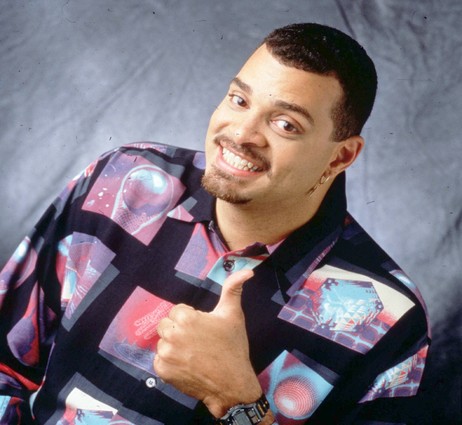
Behold the horror of Sinbad.

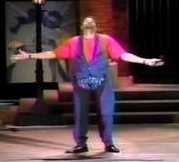
Okay, back to Sinbad.  As a boy raised by stand-up comics, I loathe Sinbad.  In particular, I remember watching one of his comedy specials as a child, seeing him saunter around a stage dressed in the fluorescent overall spawn of M.C. Hammer’s pants, going off about the difference between black mamas and white mamas (the answer: whuppins).  It was the blandest stand-up I ever remember watching.  Since then, Sinbad has always struck me as a jumpy, poor man’s Bill Cosby, without the imagination, storytelling, or wit.

I say all this because Sinbad is awesome in this flick.

Obviously, Schwarzenegger’s the focus; in fact, he takes up way too much focus.  His woes are typical in a Christmas comedy.  He must save his family with the power of presents, stop the pervy neighbor (Phil Hartman, playing with creepy banality) from hitting on his wife, and take on an army of bad Santas who want to “deck his halls”.  Okay, seeing Schwarzenegger fight a giant Santa and a midget Santa at the same time is pretty amazing.

Sinbad’s rival toy-hunting parent is so marginalized and second-tier that we never even see his kid, the child whom he’s fighting for and who (spoiler alert) ends up with the super awesome toy of the season.  Lil’ Darth, beaming with restored family joy, needs not his super dandy action figure, so he hands it off to Sinbad, who but minutes before (spoiler alert) almost killed him.  And yet there’s no payoff from the other kid, neither the bright-eyed joy from getting Super Awesome Toy 1996 nor crushing loss at knowing that dad’s going away for a long, long time.

It’s in keeping with Jingle All the Way’s theme of rabid Christmas consumerism that not only does the film not care about anybody’s problems but those of Schwarzenegger’s family – nobody else but his family really seems to exist.

With the limited time the film affords him, Sinbad does everything he can to be memorable, and he succeeds.  He’s the guy who (accurately) questions the Christmas gift racket, unlike Schwarzenegger’s hapless, overcompensating dad.  Yet Sinbad, who somehow shows up at the same diner where Schwarzenegger is recuperating from his latest misadventure, takes a swig of tucked-away booze and also notes that his neighbor, who received Super Awesome toy 1974, is a billionaire.  Sinbad’s postal worker didn’t, and thus isn’t.  This is a pretty incredible leap of logic.

The postal worker part comes into play when Sinbad pulls out a loaded package and blows up a room full of cops!  Yeah!  Jingle All the Way actually makes Sinbad a domestic terrorist!  Of course, the devastation is later revealed to be some harmless Wile E. Coyote grade charring, but there’s a second after one sees the explosion where one thinks: “Holy crap!  Sinbad just killed a bunch of guys!”

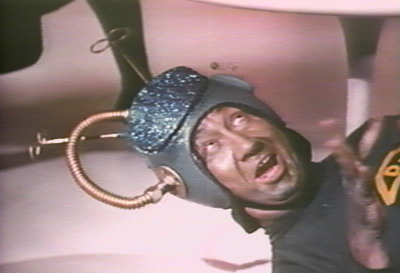
In the final stretch of the film, Sinbad and Schwarzenegger have their final showdown over Super Awesome Toy 1996, and Sinbad ends up in some green Martian superbrain getup reminiscent of Santa Claus Conquers the Martians.  While in this epic conflict, Sinbad does the best thing that happens in this movie.  First, he uppercuts a pink saber-toothed tiger wearing a shiny gold thong, played by the great Curtis “Dudley ‘Booger’ Dawson” Armstrong.  After dispatching this interloper, he pursues Schwarzenegger’s kid and his Super Awesome Toy through a crowded Christmas parade.  When he reaches the part of the stream populated by walking Christmas ornaments, Sinbad shoves over a guy dressed as a present and screams: “Get out of my way, box!”  It’s meant to be a throwaway scene, but the absurdity is genius.


You know, I definitely wouldn’t have enjoyed Jingle All the Way as much if Sinbad wasn’t in it.  I may have to revise my standing opinion on his work, even if I never change my mind about his Hammer Pantsuit.

It’s a Christmas miracle!


(As a super awesome amazeballs bonus, behold this epic tune from Schwarzeneggercore band Austrian Death Machine, referencing the ball pit scene from Jingle All the Way!  I give you… “I’m Not a Pervert!”)


Bizarro Masterpiece Theatre: Santa Claus Conquers the Martians

The Grand Mal Face of Christmas.


Film: Santa Claus Conquers the Martians (1964)

Director: Nicholas Webster

Starring: John Call, Leonard Hicks, Bill McCutcheon

Written by: Glenville Mareth


There are a lot of stupid Christmas movies out there, so I’m not going to say that Santa Claus Conquers the Martians is the most ludicrous holiday film out there, but it’s certainly in the running.  The B-movie production values and the bizarre premise of Santa meeting extraterrestrials certainly give this flick a healthy dose of ridiculousness, though beyond the idea of sci-fi Santa, the plot is your conventional God bless us, everyone.

The element which pushes this masterpiece into the plaid is Dropo, an embarrassing specimen of Martian man who may be the greatest crackhead in cinematic history.  Characterized as “the laziest man on Mars” and looking like a cross-eyed green version of Data from Star Trek: The Next Generation, Dropo bumbles and violently twitches around the spaceship sent to kidnap Santa and bring joy to the children of the red planet.  Of course, once Santa and some wayward Earth kids get on the Martian expressway, this bumpkin idiot starts glowing with the innocence of a child with massive head trauma.  He helps the earthlings fend off some bad green apples, Santa infects everyone with the spirit of Christmas, and due to a severe lapse in judgment Dropo becomes the Martian Santa Claus.  I feel sorry for them.

I’ve never seen epilepsy captured so convincingly on film.  Dropo’s manic, chinless antics at times become frightening in their intensity.  Half of the time I expected members of the crew to run into the shot and put a spoon in his mouth.  This is not the man I would entrust with the seasonal happiness of a potted plant, much less an entire planet.

My vote for Martian Santa Claus would go to Cousin Eddie from National Lampoon’s Christmas Vacation 1 and 2, played by the great Randy Quaid.  Heaven knows he needs the work.


Y Marks the Spot: Occupy the Bottom

Viva la Revolucion!

I want to preface this rambling piece by saying that, in over three decades of my existence, this is the first and only year that I’ve been genuinely interested in where America is going.  Sure, seeing Obama get elected was great, but it was still the usual game of token democracy trotted out with Leap Year regularity, and I don’t get involved in that (and I didn’t).  This year, I suddenly found myself bearing an overabundance of newfound pride in Wisconsin as hundreds of thousands of my fellow Midwesterners rose up to tell their tin pot dictator to go to hell.  And then, I’d say almost as a direct consequence, the Occupy Movement turned the greedhate nationwide.  It is simply breathtaking to see Americans get so pissed off that they’re willing to inconvenience themselves to pay more than the usual lip service to our ideals of freedom – and no, joining the Tea Party and trolling the rest of the country doesn’t count as this.

I hope we’re seeing the dawn of the next economic civil rights movement, but I have one pretty big problem with all the uprisings I’ve seen this year.  Okay, two; the coordinated police brutality of recent times has been pretty upsetting.  And while we’re on that subject: who the hell gave bike cops the authority to pepper spray protesters?  Has the world suddenly become a mad version of Pacific Blue?  Is Mario Lopez the new face of the modern police state?

Deep breath.  Back on topic.  Just about every time I hear otherwise wonderful economic insurgents discuss the menace of the current climate of unchecked corporate greed where damn near everything under the sun has been made for-profit, the fears and worries usually end up in one place.  The problem, they usually say, is that the middle class is in danger of disappearing.

I don’t know about you, but my heart doesn’t exactly bleed for the middle class.  It’s a nice enough concept, a subtle endorsement of share the wealth that we peasants could use a lot more of.  It’s also a pretty meaningless term.  In a parallel reversal of the truism that none of the insufferable hipsters think that they are insufferable hipsters, a whole lot of Americans seem to regard themselves as middle class when they aren’t even close.  I’d say that middle class ranges between affording a house and a quarter million dollars, but I think the popular definition has become being able to sleep in your own room, no matter how large or small that room may be.  I disagree.

More importantly, when I think of the victims of capitalism, my first thoughts aren’t of people who can (or who used to be able to) afford a house.  It’s of people who everyday are starving to the brink of death, who can’t afford even the most basic of health care, who live in Third World conditions in a First World country.  It’s the people who live under bridges because the government refuses to divert a cent of defense spending toward feeding and housing the people supposedly defended.  You’ll forgive me if my sympathy for the so-called middle class comes a bit late.

As one of these broke-ass people who live one disaster away from financial collapse, I can say that when I see these well-meaning people wringing their hands and loudly wailing about the gloomy future of the middle class, I get a little pissed and I feel a whole lot left out.  This is, of course, unless we’re fighting to expand the cushy middle class to encompass everybody, which would be a very comfortable brand of communism.  (We are the 100%!)

I know – and yet, still, I hope – that the American protests of 2011 are based on community and kindness and wanting to help out one’s fellow man.  Yet every time I hear the term “middle class,” my certainty fades a bit.  I wonder if these aren’t movements based on social justice but on envy.  I wonder if the suburbanites are just using the proles to skim more off the top of the pyramid.  I wonder whether the poor will once again be the dupes.  In the same vein, imagine bitching about the cost of your rent in front of a person who hasn’t lived indoors for years.  Could the homeless become the dupes of the minimum wage slaves?

One of the genius rhetorical moves of the Occupy movement has been moving past this potential class infighting to paint the conflict as everyone against the super-rich.  “We are the 99%” is a much more inclusive catchphrase than “Save the middle class.”  And as much as people think they’re unwavering bastions of conviction, well, they aren’t.  We’re usually stupid, malleable sheep in public, and as such words and tone matter big time in a mass movement.

Side note: As much as I love the idea of a horde of people shouting down public displays of aristocracy, I still cringe every time I watch a repeat-after-me Mic Check, even as I cheer.  I suppose synchronized disruption is better than blind obedience, but still.

Deep breath.  Back on topic. Summation: If you say you’re going to stand up for (almost) everybody, then stand up for (almost) everybody, even the middle class.  In America alone, that includes the millions of people that you don’t know, have very little in common with, and may in fact dislike intensely.  It’s damn near impossible to maintain that level of idealism.  If you want to get anything done, attempt it anyway.

Bizarro Masterpiece Theatre: Pee-Wee’s Playhouse Christmas Special


Film: Pee-Wee’s Playhouse Christmas Special (1988)


I’ll pretty much put up with anything that Pee-Wee Herman has to offer with a big stupid grin on my face.  I’m not saying that the inevitable Christmas special that came out of Pee-Wee’s Playhouse was any different, but I will say that there were a few moments while I watched this extravaganza when I wondered what the hell was going on.  It’s certainly not half as triumphantly horrible as the Star Wars Holiday Special, though I’d have traded at least half of the special guest stars wandering through the Playhouse for one bartending Bea Arthur.  I would, however, gladly keep Pee-Wee’s opening segment featuring a dancing choir of Marines.

The logical place to start discussing all the madness is at that legion of guest stars.  Halfway through watching the Del Rubio Triplets prance around in the snow and croon out “Winter Wonderland,” I realized that I was watching what was supposed to be a kid’s show.  It would be a very strange child who would give a rat’s ass about any of these guest stars, save maybe Magic Johnson.

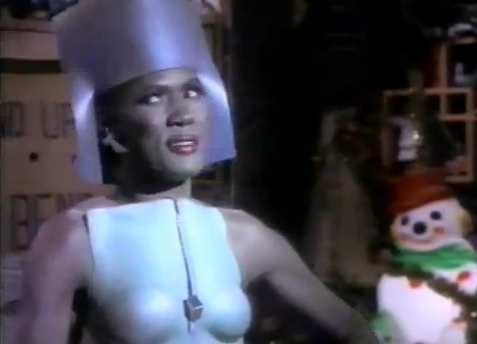
Here’s a list: Frankie Avalon and Annette Funicello serve as Pee Wee’s slave labor; Little Richard whines about not being able to ice skate; Whoopi Goldberg, Dinah Shore, and Oprah get blown off by Pee-Wee via Picture Phone; Cher mysteriously shows up and demands to know the Secret Word before creeping off like a creep; K.D. Lang flails around in song like some cracked-out Lady Elvis; Joan Rivers is onscreen for about five seconds; Zsa Zsa Gabor hangs out with a cow; professional plastic surgery victim Charo twitches out a song; and Grace Jones sings “Little Drummer Boy” in a tit-suit.

What child wouldn’t be irrevocably scarred by this star-studded cast?

CHRISTMAS.

Of course, between the brief strobe flashes of old-timey celebrities there’s the usual half-assed story about learning the true spirit of Christmas.  In this case, it involves Pee-Wee not being such a greedy bitch that every other child on Earth is forced to go without presents.  Of course, he comes around and gets to ride off with Santa, blah blah blah.

The real conscience of the show is professional nogoodnik puppet Randy, who pulls the plug on the Christmas tree and rails about the shallow commercialism of the holiday.  Naturally, Pee-Wee quickly shuts down this unrest by showing him a video of white kids portraying the nativity in front of a bunch of Asian kids, which is somehow enough to calm Randy’s rebellious spirit.  Lame!

Still, I’ll take Pee-Wee’s Christmas celebration.  Most importantly, Pee-Wee’s in it.


The Designer’s Drugs: Christmas Music for People Who Hate Christmas Music


Medium: Album

Stimulus: Christmas Music for People Who Hate Christmas Music


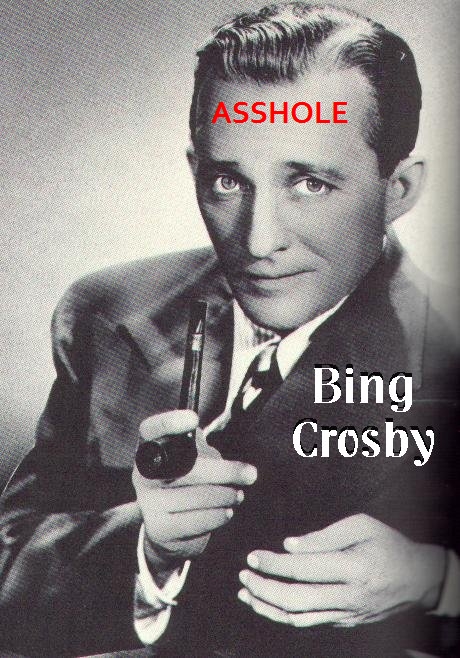
If you have a job that requires you to work in a store in December, then you probably hate the seasonal onslaught of holiday music with a white-hot passion.  Me, I have a special fantasy involving a time machine, Bing Crosby, Nat “King” Cole, and a steel chair studded with nails.  Really, I’d expand that fantasy to include any jackass rock band who decides that the world just could not survive without its take on the classics (I’m looking at you, Barenaked Ladies).  Yet fear not, fellow Christmas sufferers, for there is holiday music out there that will not make you consider seasonal rampage!  Enclosed are my suggestions; feel free to sneak them into your store’s playlist.


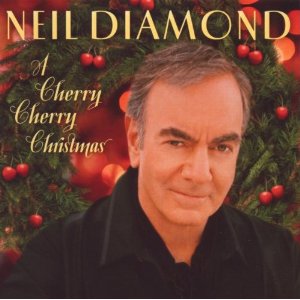
Neil Diamond – A Cherry Cherry Christmas


Really, I only suggest this because I’m kind of a nerd for Neil.  Beyond the sheer joy that is Neil Diamond, this is a pretty square affair.  The only swerve comes when Neil appropriates Adam Sandler’s “The Chanukah Song” – though he sort of blows it by endorsing gin and tonickah yet not supporting the smoking of marijuanikah.  Holiday double standard!


Tori Amos – Midwinter Graces


It’s a Tori Amos album, sad and full of piano.  Its holiday sensibilities run pretty pagan; it barely qualifies as a Christmas album, at least in the sterile modern sense.  If you like Tori Amos, you will like this.


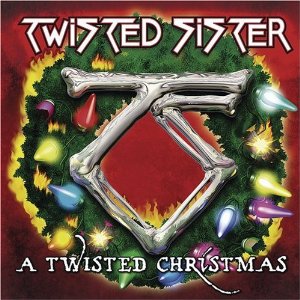
Twisted Sister – A Twisted Christmas


I love this album.  Twisted Sister rules Christmas.  The songs aren’t much more than heavy metal versions of the old holiday standards, and for all their distortion they’re played pretty straightforward.  Still, there’s something joyous about hearing “Oh Come All Ye Faithful” played almost exactly like “We’re Not Gonna Take It.”  This is the only Christmas album that will have you pumping your fist with joy.


Fred Schneider and the Superions – Destination… Christmas!


My respectful boner for Neil Diamond multiplies tenfold for Fred Schneider of the B-52s.  Besides having the benefit of being comprised entirely of original Christmas songs, Destination… Christmas! is a balls to the wall celebration of the absurd.  Schneider rocks it wild, singing about fruitcakes, murderous yetis, crummy trees, and lame relatives.  He lurches around like a drunken old pervert in “Jingle Those Bells” and subjects the listener to four minutes of nothing but French orgasmic moaning and jolly ho ho hos at the final track (“Santa, Je T’aime”).  Best Christmas album ever.


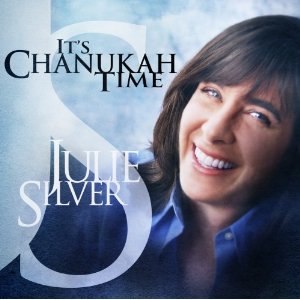
Julie Silver – It’s Chanukah Time


I only mention this one because I have a redneck friend whom I gave this to one Christmas as a joke on his suburban racism, and apparently he still listens to it.  Breaking down barriers!


Happy Holidays, and keep Mithras in Christmas!

Y Marks the Spot: Leaving the Cult

WAR IS PEACE. FREEDOM IS SLAVERY. IGNORANCE IS STRENGTH.


There are a few of my codes of conduct that come into play during this tale of liberation from greasy, incompetent drudgery.  The first: never stick your foot in a bear trap.  There are a lot of bad situations which can be avoided if one simply shuts the hell up and refuses to be masochistically polite.  The second: fight like a pussy.  When faced with a blustering moron with delusions of power, just smile, nod your head, and proceed about your day as though that person didn’t exist.  Or sharpen your knives.

Bravery has its time and place, but subverting and manipulating the stage from behind the scenes works in ways that loudly standing up to the assholes doesn’t.  For one, assholes are chronically unable to realize that they’re the problem, not everyone else.  For two, by standing up for yourself, you become the asshole because you’re the one rocking the boat.  Don’t believe me?  Ask an Occupy cop’s can of pepper spray.

I say all of this because very few people who work at my now former shitty burger job had any clue that I hated that job with every ounce of my being from day one.  Almost no one at Burger World knew that the place was the source for a lot of my recent rage and exhaustion, that the place wore both my mental and physical well-being down to the bone.

All my moronic and micromanaging bosses saw was my blank face.  All they heard was my monotone work voice, and in those rare moments when I didn’t want to flip over my work table and walk out, a few jokes.  Of course, they mistook my silence for assent, as tends to happen.  The kings of Burger World thought I was a real laid-back dude, and thus they attempted to wring out every drop of sweat from me while paying me as little as possible for my trouble.

If working at Burger World felt more like honest work and less like a pyramid scheme, I may not be so hateful toward the place.  But it was a hellhole.  As a person, my immediate boss is a pretty good guy, and we got along pretty well.  The problem was that his bosses are the sorts of tightasses who swallow coal in hopes of shitting diamonds.  I feel bad for what my boss has to go through, because every moment of his job entails cutting every expendable second of labor, which wears him out and turns him scummy.  My favorite example is when he paid me twenty bucks to not clock in for my prep shift because he was so piss scared about labor costs.  He’s going to have a nervous breakdown at some point, or a heart attack.

Yet sympathy does not equal acceptance.  There was a long stretch of time in which I came home every day from work, boiling with a new tale of infuriating managerial stupidity.  I should have been more irritated about repeatedly being scheduled eight hour shifts and working only five – while simultaneously not being allowed to go home.  By that point, however, I was so burnt out on the job that I limply accepted the cuts in hours and sat in the corner, reading and playing video games.

I know there are worse jobs out there, but all that knowledge does is make me feel super smart for not working at those places.

I also feel good about never forgetting the plan to leave.  Having just moved into a place of my own, I needed the job, and I’m grateful for the money.  But I was never complacent.  I always watched for the way out.  Appropriately enough, it was on the day when I dodged out of the first step towards becoming a Burger World supervisor – a promotion that would have surely spelled my end as a freethinking, sentient creature – when I was offered a new job on the ground floor of a far superior food place in town.  I’m much, much happier there.

However, there were two problems.  The first was that the new job didn’t start me with enough hours to allow me to quit Burger World outright.  The second is that Burger World is kind of run like a cult, and my victimized boss has thus become a sad panda who perpetuates the weasely web-spinning that traps people there.  What this meant for me was that I didn’t feel like I could tell him that I was working at another food job.  He’d have just said that I already work at a food job, so I should just tell them thanks but no thanks.  (In fact, he did try to edge out the other job anyway, but I shut that down.)

I had to invent a lie, and using my magical powers of improv I created a pretty convincing alternate reality that I’ve continued to stick to.  It wasn’t all false; I did apply to work at my local library, though I didn’t get the job.  But my story to Sad Panda was that I was now a librarian, that it was my main field of work, and that Burger World had officially become secondary.  He whined and bitched and played Stockholm Syndrome on me, but he finally got the hint and backed off.  Still, the scarce days I continued working at Burger World remained the asshole of my week.  It wouldn’t do to reduce its hold on me; the burger cult had to be completely eradicated from my life.

But the end has finally come.  On Black Friday, my bosses at my new job gave me the news that my hours were going to be increased.  I could finally quit Burger World.  I sent my old boss a text saying that the library had monopolized my holiday availability.  I have no intention of returning.  It was far more farewell than Burger World deserved.

It was the best Black Friday ever.  Escape feels epic.

Bizarro Masterpiece Theatre: Corky Romano


Film: Corky Romano (2001)

Director: Rob Pritts

Starring: Chris Kattan, Peter Falk, Chris Penn

Written by: David Garrett, Jason Ward


I’ve come to develop a theory that Chris Kattan is the closest thing the latest generation has come to replicating Don Knotts.  This is in no way meant to be an insult.  The world needs more spastic, bug-eyed man-children busting out sweet karate moves and tripping over everything in sight!

Kattan carries on this fine cinematic tradition as Corky Romano, the grinning idiot exile son of an ailing mobster who bumbles his way into infiltrating the FBI on his dad’s behalf.  His brothers, a rage-filled illiterate and a rage-filled closet case (the latter played by the always wonderful Chris Penn) roundly abuse and belittle their returned sibling to his breaking point.  There’s a great moment at the beginning in which Corky moves to shake his reading-impaired brother’s hand and the scholar instead fills his hand with a fart.  It’s played very highbrow.  Pops Romano, squintily portrayed by Peter Falk, spends most of the film laid up in bed, passively condoning the abuse before a halfhearted good guy turnaround at the end.  Of course, there’s a girl in the Bureau, a couple of treacherous bastards on both sides of the law, and everyone improbably gets behind Corky as the story progresses.

The story may be typical, but I think Chris Kattan is hilarious as the false Agent Pissant (pronounced Pees-ahnt, because, you know, it’s French!).  He’s clearly game for any ridiculous thing the script asks of him, whether it’s dressing up as a girl scout or a skinhead, badly firing an assault rifle, giving CPR to a dog, or delivering a coked-out speech about crimefighting to a room of kids.  Perhaps the film’s best line has Corky suddenly screaming to the kids: “I should buy a boat!”

No offense intended toward the Great Chris Penn, but this film would have been pretty dull without Kattan jittering around at the helm.  I really like this man’s work, and I’d like to see a lot more keyed-up awesomeness from him.  Make it happen, Hollywood!


Y Marks the Spot: Drink to Win and the Ponderous Punches


I have this weird mental game that I’ve played since I was a little kid.  Odds are that if you’ve ever been around me, I may have played it with you.

It goes like this: while sitting around with someone, I sometimes wonder how my relationship with that person would change if I suddenly threw a punch.

Sounds like the musings of a psychopath, no?  Well, it was created during my childhood, a time in my life when I was swirling in a Lord of the Flies-like maelstrom of violence, locked in combat with my fellow child-savages.  The game certainly comes from a place of anger.  Still, the game which I’ve just now named The Ponderous Punches isn’t about running around and smacking people in the face.  It’s not about transferring my questions on the fragility of human relationships into any bruising reality.  In any event, I’ve never played it to that point.

But I may have recently come close.

The Friday before last, a group of my various friends congregated at a house in the mountains at the edge of town.  Our goals, beyond the basic one of being around each other for the first time in weeks, were to play board games and watch bad movies.  Along with the awesome He-Man movie, I came armed with an especially heavy screwdriver, and I proceeded upon the path to an additional, time-honored goal: to Drink to Win.

I woke up in my bed the next morning, feeling bright and vibrant and ready to go to work.  There was some confusion as I stumbled around, checking my things and making sure that everything taken to the gathering had returned with me.  Besides a jacket I’d later reclaim, everything had made it.  I remembered little beyond the point in the night when three of us had put on tutus and pranced about like idiots; the only flash of consciousness to follow happened as I sat in my backseat and had friends drive my car home and drop me off, after which I pranced through my doorway and grinned like a physicist.  But I’ve long known that, even while balls to the wall blacked out, I’m kind of brilliant.

Work was not the usual desperate hangover fare in which desperate guarantees of good behavior are made to distant deities in exchange for metaphysical aspirin.  It went fine.  I wasn’t thrilled about walking through the rain to my friends’ house to pick up my car, but I made the trip well enough.

After my friends handed me my keys, I asked them if I had done anything too embarrassing over the course of the evening.  Embarrassing, yes, they answered, but nothing too horrible.  It was good enough for me.  I drove home, wondering why I was such a joyful drunk.

It was a few days later when I logged onto the internet and found the first indications that this sense of joy might not have been entirely accurate.  Entering the Facebook group page of the film group which encompasses most of the people at Friday’s party, I saw a cryptic, rambling, freaked out message from one of the members.  It said that he wasn’t quitting, but that he didn’t want to hang out with us while we were drinking anymore.  He also invited us to shut the hell up if we had any questions.

Almost at the same time, I sent a text to the party’s hostess asking what had happened and posted a comment on the page hoping that the poster was okay.  Almost at the same time, I got responses from both targets.  The hostess said that the poster had accidentally been elbowed in the face.  In the five seconds between reading that answer and being instant messaged by the poster, I had a sinking certainty that I was responsible for whatever had happened.

The poster’s IM confirmed this.  It also said that the hit was a punch, and that it hadn’t been an accident.  My initial reaction was disbelief; the closest I’ve ever come to drunken violence before had been Three Stooges-style slapstick fighting with my friends.  But as the story was told to me, I had gotten pissed and laid the poster out.

Apparently the more sober people among us had made the mistake of playing Jenga in a house full of raving barbarian drunkards.  As I’ve heard it, my reaction to this architectural audacity was to rush over and knock them over at any opportunity.  The poster, who doesn’t drink, was assigned the dubious honor of keeping us savages away from the playing field.  After my last attempt at destroying the tower, he lured me away with false promises of seeing something amazing.

When he showed me a passed-out friend not doing anything amazing at all, my bullshit detector flashed on.  Yes, I have a bullshit detector, even while blacked out.

“You don’t have anything to show me,” I said.  The poster nodded.  Without another word, I punched him in the face.

Standing over him, I apparently said: “That’ll teach you to lie.”

Nobody else witnessed this bizarrely principled explosion.  When I asked about it, everyone – my victim included – said that the rest of the night was awesome, but nobody else saw me throwing a punch.  The recipient told me that he went into meltdown, refusing to leave his apartment for days, but we talked it out, I apologized, and we are back to normal, I think.

Oddly enough, I proposed a get-together last Friday night, an affair with the goal of Drink to Achieve a Modest Moral Victory.  The recipient of my blackout punch, who said he didn’t want to hang around us when we drank, showed up with a gigantic duffel bag full of liquor.  I’m not sure what that means.

I didn’t throw a Ponderous Punch, but maybe I played the game, all the same.

The Designer’s Drugs: Florence and the Machine – Ceremonials


Medium: Album

Stimulus: Florence and the Machine – Ceremonials (Deluxe)

Anno: 2011


The thought that ran through my head as I listened to this amazing album was that this is the sort of music that wins Grammys and deserves them.  Ceremonials is a mixture of the ambition of an orchestra, the aggression of rock, the hooks of pop, and the pipes of Florence Welch, a vocalist who could sing the phone book and make it sound like an erotic awakening.  The total product is easily the best album I’ve heard this year.

In fact, it may also have the year’s best track.  “What the Water Gave Me” starts as a steady pace of gloom and pieces of harp, pushing through the introductions before dropping into a hook of subterranean organs, shards of guitars, and a swelling choir that gathers its strength as the song progresses and soon explodes everything.  The song’s titanic conclusion isn’t the usual bitchy distorted guitar angst that typically characterizes rock, but it’s about as powerfully rock as anything I’ve ever heard.

And still, it’s only one song in a great series.  “Shake It Out” is a beaming sadjoy pop tune which carries the right sort of pretentious messianic overtones.  “No Light, No Light” is run by an organ and a smashing drum pulse operating alongside words which might not have been as catching if they weren’t delivered in Welch’s towering wails.  “Heartlines” is in the same percussive orchestral vein, though it has more of an esoteric beat and Welch is even more impressive at the helm.  The electronic R&B of “Spectrum” swings from the subdued intensity of the verses to blasts of voice and harp.  “Bedroom Hymns” closes the album with a frenzied swing rush of drums and piano while Welch does a little bit of the old erotic religion dirty talk.

There’s absolutely nothing on Ceremonials that comes within a light year of bad.  The very worst thing I could say about it is that there’s a song called “Never Let Me Go” that comes off as a slow, minimalist love ballad from the 80s, which isn’t my style.  If you’re into slow, minimalist love ballads from the 80s, however, this thing will spin your wheels.  There are shortcomings to be found throughout the album, to be sure, but the orchestration is so tightly woven in each and every song that any weakness is compensated for with a dozen strengths.

So yeah.  I severely doubt that I’m going to hear anything as good as this for a long, long while.