Bizarro Masterpiece Theatre: Con Air

TRIUMPH.

Film: Con Air (1997)

Director: Simon West

Starring: Nicolas Cage, John Cusack, John Malkovich

Written by: Scott Rosenberg


I think Jerry Bruckheimer, Michael Bay, and their audiences are the death of cinema’s artistic merit in general and the death of action movies in specific.  But allow me to give Bruckheimer his due for producing this ridiculous masterpiece of explodey fight film.

In addition to having the guts to name itself after a brand of hair dryers, Con Air has the boldness to pretty much recycle the theme of a previous Nic Cage flick, The Rock. In that film, Cage is the straight man sidekick to Sean Connery’s reformed con, both set after the usual gang of ne’er-do-wells.  Con Air sees Cage promoted to the reformed con role and bequeathing his sidekick status to the chronically flustered John Cusack.  Yet there’s an additional bonus in the casting of the film’s villains, a plane full of irredeemable criminals including Dave Chappelle as a cracked-out arsonist, Steve Buscemi as the world’s nicest mass murderer, and thespian John Malkovich giving his take on Stone Cold Steve Austin.

Malkovich is such an awesomely ludicrous contradiction in Con Air. His villain, codenamed Cyrus the Virus, is talked up by being said to have killed more people than cancer, and yet there’s such a nasal condescension to the nasty man that he sometimes comes off as your average Starbucks customer.  Cyrus could have said that he would tear a guy’s face off and wear it as a diaper, and I’d have heard a demand for a triple shot of espresso and non-dairy creamer.

It doesn't help that he does stuff like this.

Just as wonderful is the glowing aura of triumph that wraps around Nicolas Cage in every scene, lingering like a strong deodorant.  His Bastille Day-obsessed hero is so over the top magnificent that one imagines him waving an American flag in one hand while he rains justice down on scum and villainy everywhere with the other.  In this hyperreality, our hero also has a third arm to clutch onto the stuffed bunny that he aims to give to his daughter, whom he is meeting for the first time and who, by God, needs a bunny delivered by the greatest man alive.

Con Air was made long before the advent of the Chuck Norris Fact, but I’d be willing to bet that the creators of that meme took in more than their fair share of Nicolas Cage cinema.  Most action films of the Bruckheimer/Bay School of Shit try a little too hard to be cool.  Con Air gives not the slightest shit about such trivialities.  As such it becomes so ass-kickingly ridiculous that it’s almost surreal.  If any action film has gone to plaid, Con Air is it.

Y Marks the Spot: The Human Shields


My best friend is in training to someday take the reins of his family business.  In the course of this education he has had to learn some hard truths of business, and he has been required to do things in the quest for the bottom line which don’t exactly fill him with self-worth.  I’ve had a few conversations with him in which he has freaked out over having to lay off veteran employees, or in which he wonders whether he might be a little too good at being a company man.  While unlike me he has a family and thus the sort of obligations which tend to fade younger principles, we’re on the same page on just about every ideal.  The main difference between who we are today is that he can better pass as normal.

After the recent madness descended upon Wisconsin, my first conversation with my friend naturally involved me asking him whether he was getting flak for being a businessman.  I didn’t get the impression that he was being painted as a greedy villain, and he came out pretty hard against Walker’s power grab.  However, he did note that he is dreading what he may be forced to do as a local businessman as a result of trends set by corporations.

His dismal outlook on the matter, combined with many other such conversations I’ve had with others in the past few weeks, led me to articulate a viewpoint that has been solidifying in my brain during the Wisconsin protests.  Small businesses are the human shields of corporations.

As a term, capitalism is as outdated and indistinct as punk rock, and yet the real genius of its most extreme adherents is that they’ve managed to keep it in the public lexicon.  What this does is create a universal economic banner that has little basis in reality, perpetuating the myth that an attempt to stop the excesses of corporations is an assault on small business.  Captains of industry take the lion’s share of the profits, but when it’s time to talk taxes and regulation it always seems like the world’s Joe the Plumbers get trotted out with sob stories about how the government – never the corporations themselves – are out to destroy their grassroots hard work.  We saw this during the 2008 financial meltdown; we’re seeing this in today’s union-busting fever, and we’ll see it so long as small businesses are allowed to survive.

A parallel argument tends to paint all critics of unfettered capitalism as hardcore Stalinists or Maoists.  I saw this during the current conflict, as Rush Limbaugh went on a typical troll and deemed Madison “Moscow West” – as though Madison’s communities of college students, artists, Packer fans, and hippies would be down for running gulags and engineering mass famines.

Though I’m usually one of these dirty critical commies, I can’t deny that big business serves a great purpose.  For good and ill, big businesses connect consumers and distribute products in a way that small business can’t, which results in greater commercial egalitarianism.  Chain stores have better hours and catalogues than small businesses, and it’s easier to get a job in a big company (I’ve found most small businesses to be rather cliquish in their hiring practices).  Our modern, costly state of high technology is almost wholly beyond the reach of grassroots business.  For all their sins, corporations fill a vital role in our world.  The problem is that they rarely hold themselves to that role.

Let’s not delude ourselves into thinking that small businesses and large corporations are the same creatures with the same interests.  Let’s not act as though the same laws of taxation, the same labor conditions, and the same levels of government regulation can be applied in the same manner to both large and small businesses.  They can’t.

Whereas franchise stores are interchangeable clones worked by faceless staff, backed by enough money and advertising to steamroll over any resistance, the survival of small businesses depends entirely upon the connections they make with their communities.  This isn’t a necessary consideration for Wal-Mart, or Best Buy, or any company who can afford to sell its products for less than it paid for them.  Consumers may flock to dirt low prices, but when corporations use those profits to shut down every small business in town, the customer truly gets what it paid for.

So why don’t we completely divorce the two concepts and acknowledge that small businesses and corporations are completely different, often competing species within the capitalism genus?  Let’s coin new terms for the economic disciplines of each and stick to them in the public discourse, so as to avoid the confusion and blurred lines which screw up all discussions of capitalism.  So far, the best word I’ve thought of to describe the work of small businesses is localism.  I’m not the biggest fan of that term (too bad socialism was already taken), but corporatism works just fine to describe the other side.  Of course, it’s always profitable for the big shots to duck behind the bodies of their less powerful counterparts, so don’t expect to ever see this separation mentioned in the mainstream.  But that’s the fun of living in a post-media world in which the mainstream is fairly irrelevant.

Keep these distinctions in mind the next time the elected monkeys raise a stink about taxes, redistributing the wealth, or any other obstacle which threatens the impending dollar feudalism.  People like my friend aren’t the only human shields at big business’ disposal.  We are all cannon fodder, if we allow ourselves to be.

Y Spy: Michael Showalter: “Mr. Funny Pants” Wears Many Hats

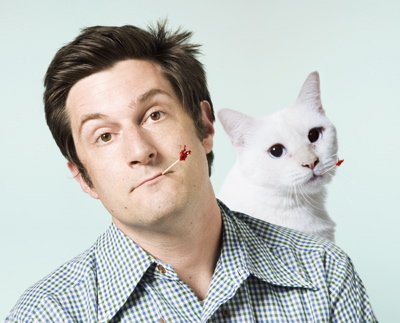
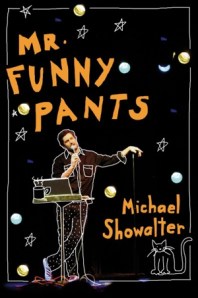
Michael Showalter doesn’t come off as a person who can sit still for long.  Coming up with a comedic army in “The State,” he went on to star in many TV projects with various Statemates as well as starring in the cult classic “Wet Hot American Summer.” In addition to his work before the camera, Showalter has filled many roles behind it, most notably as a screenwriter and director.  He’s also a stand-up comedian with an album to his name (the aptly titled “Sandwiches & Cats”), an artist, and a teacher.  With the release of his new book, “Mr. Funny Pants,” he is now a published author as well.

In our conversation, Showalter made it abundantly clear that he isn’t a person who feels bound by comedic routine.  It was equally obvious that this sense of diversity isn’t so much in order to stay fresh in the public eye or due to any PR calculation.  Instead, it’s a sign of Showalter engaging in a more pure exploration of his abilities.

Y Spy: What is Mr. Funny Pants about?

Michael Showalter: Oh, boy.  It’s a book about trying to write a book, among other things.

Y Spy: How did you go about the process of trying to write a book?

Showalter: You sit at your computer and you open a file that says Book.  Then you start writing.  It starts with you and writing, and then you go from there.

Y Spy: How did it go for you?

Showalter: Well, it was a lot of trial and error, but it was fun.

Y Spy: Is there a lot of autobiography in the book?

Showalter: Yeah.  I talk about my childhood, and I talk about my career.  There’s a saying: “Write what you know.”  I sort of went with that.  I tried to write about what I know.

Y Spy: And what do you know?

Showalter: I know where I live; I live in Brooklyn.  I know that I like coffee.  I know that I like cats.  I know that I watch a lot of television.  Very banal stuff.

Y Spy: Is the book a mixture of comedy with that sort of “This is my life; I got up, and so on and so forth”?

Showalter: It’s mostly just “This is my life; I got up, and so on and so forth.”  I actually think that would be a great book.  I tried to be funny, but I tried to focus on stories that maybe had something inherently funny to me, or tragic, and in tragedy there’s comedy.

Y Spy: Not forcing jokes to make it a humor book, though.

Showalter: I think it could function as a humor book.  It certainly has plenty of goofy stuff in it.  There are stupid lists.  There are fairly long sections of the book that essentially are just humor writing.  So it’s kind of a combination of a memoir and a humor book, a joke book.

Y Spy: How much of your screenwriting experience came into play in the writing of this book?

Showalter: I talk a lot about screenwriting in the book, but in terms of actual storytelling, this was more in the vein of an early Steve Martin or Woody Allen book where it was basically odds and ends, funny stuff, bits and pieces, twigs and yarn of just humor, loosely tied together with a narrative.  I do talk a lot about screenwriting and the Hollywood system, so I incorporated those experiences into the book in the form of stories.

Y Spy: Are there any stories about pants in the book?

Showalter: No.  The name Mr. Funny Pants happened [because] I was giving them title suggestions, and for one reason or another they were rejecting all my title suggestions.  So out of frustration and completely as a joke, not thinking they would take it seriously, I said: “How about Mr. Funny Pants?” Why don’t we call it the stupidest title I can think of?  And they loved it.

Y Spy: On the Mr. Funny Pants tour, you’re doing both book signings and stand-up shows.  How much will the book tie into your stand-up?

Showalter: It’ll be kind of old stuff and new stuff.  At the signings I’ll be reading from the book, but on the tour I’ll be doing stand-up material.  Some of that material will be inspired by the book.

Y Spy: I’ve always had the impression that you’ve been a person who wants to explore as many different forms of comedy as possible.  Do you feel that you are actively chasing that sort of diversity?

Showalter: Sort of, yeah.  A lot of it has to do with being easily distracted.  I think the comedic careers of people I was influenced by would be Steve Martin, Woody Allen, and the Monty Python guys, who I grew up on.  They worked in every medium.  They would do a movie, a TV show, a book, a play, an album, a tour.  It didn’t really matter, and that’s how I feel.  It’s interesting to explore the point of view in any of these mediums.  I do like doing all of it.

Y Spy: Has coming up with such a large comedic group as The State given you a greater freedom to pursue these different avenues than a solitary comedian might have?

Showalter: I guess.  I don’t know.  There’s a body of work there that gives you a certain credibility.  It’s always nice when the audience is already on your side, where you have fans or people who like what you did and have followed you through these different things.  You’re not needing to convince anybody that you’re funny, even if you aren’t, which I probably am not.  It is nice to have slowly built up people who have been with us.

Y Spy: I have a few questions about the status of some projects that have been mentioned in the past.  First, I heard you were planning on remaking Night of the Living Dorks. What’s the status of that?

Showalter: That’s something that was gonna happen a long time ago, and I don’t know what’s happening with it.  I’m attached to direct that movie, but I think it’s been in turnaround for a long time.

Y Spy: What’s the status of the State movie?

Showalter: It’s another thing that we’ve talked about for all these years that we’d love to do, but it’s just something where it’s hard to get everybody to commit to it.  I think people want to do it, but everyone’s very busy.  We’re also now pretty spread out and getting old, and now everyone has kids.  I just think it’s a logistical thing.

Y Spy: I assume I’ll get the same answer here, but Wet Hot American Summer II?

Showalter: Same thing.  I want to do it, but it hasn’t happened yet.

Y Spy: Are you planning to release another comedy album?

Showalter: I’d like to.  The book is on tape, which feels pretty comedy album-y.  I would like to do another comedy album, but I haven’t gotten around to it.  The people I did the first album with, we’ve talked about doing another one, and it’s definitely something I’d like to do someday.

Y Spy: The greatest and saddest thing I found in Sandwiches & Cats was the moment when you were so dismayed at being misidentified as Screech from Saved by the Bell. Would you care to expand upon those feelings about this mistaken identity?

Showalter: You know what I will say: I’m friends with somebody who did a show with him in New York.  I’m not sure what the show was, but it was some improv show that he was in.  I think he was playing himself, in the show playing Screech.  Apparently he’s not as bad as he’s made out to be.

Also, when he walks down the street people scream at him, everywhere he goes.  Like, “Fuck you, Screech!”  And I thought that was sad.  So I actually have sympathy for him because that must be very hard, being America’s dork.  Basically everywhere he goes, people scream at him and ridicule him.  That’s not right.

So I’m going to say I’m proud to be compared to Screech.

Y Spy: Does your sense of adventurousness and diversity, your leaping into different mediums and roles, come in any part from a desire to not be similarly typecast?

Showalter: If anything, it’s that I’m still trying to find a comfort zone and figure out what I want my career to be.  A lot of it is trial and error to figure out how I want to proceed.

Y Spy: Do you feel as though your direction has become clearer as your career has progressed?

Showalter: Just in the last year, I do think so.  I think there are certain avenues which I feel comfortable about not going down.

Y Spy: Like what?

Showalter: I don’t ever see myself being a big Hollywood person.  I think I’m starting to become more comfortable with the idea that I’m more of a New York niche person.  I like the idea of focusing on smaller projects.  I really liked writing the book.  I’m going to write another one.  I’m also working on an art book of my artwork.  I have another idea for a small film, and after that I’d like to develop something for a one-man show, or a longer stand-up act.  I’m feeling less compelled to conquer L.A., which is something that I have debated back and forth in my mind for a long time.  Do I want that?  I don’t think I do.

Y Spy: Do you think your acceptance and confidence have come with age and experience?

Showalter: Yeah.  You need to have the experiences to back it up.  I live on the East Coast; I like the East Coast.  I teach at NYU, and I get a lot of gratification out of that.  That’s not to say that I would not work in L.A.  I would.  It’s just that, bigger picture, I don’t know if that’s a universe I feel I’m being pulled toward.  I’m more interested in writing another book, making a small film, or doing something theatrical.  That’s more my truer self.

Michael Showalter will be in Seattle on Tuesday, March 8th, at the University Bookstore at 4 pm and The Triple Door at 6 pm.  “Mr. Funny Pants” is available now.

Y Marks the Spot: The Payoff

This is what freedom looks like.

The great thing about cynicism is how sensible it is.  The old adage that life sucks and then you die is as truthful as it is cliché.  I’ve long been a resigned believer in Thomas Hobbes’ idea of the State of Nature, in which every living creature is eternally at war with each other.  In his philosophy, that war is avoided by becoming a monarchist buttlicker.  I only disagree with the last part.

Living creatures may not spend every moment engaged in conflict, but it certainly seems as though it’s our default setting.  The history of humanity is essentially one of murdering the hell out of everything in our way, and once all the competition was out of the way, humanity turned on itself.  Hobbes may have felt that civilization was the remedy to the war of All against All, but I think civilization is simply the stage for the war’s next evolution.  Destruction has just been upgraded to less violent forms of exploitation.

If Hobbes’ war is to end at our hands, and if humanity’s existence is to serve any positive purpose, humanity must turn its back on its history and instincts.  We must replace destruction and exploitation, in all forms, with all their inherent neediness and weakness, with systems that are a little more constructive and self-reliant.

Until that happens, cynicism is smart business.

A few weeks ago, writing in regards to the popular uprisings in Egypt and Tunisia, I once more played the devil’s advocate.  In that article, I sniped that it would take a lot for Americans to set aside their toys and gadgets and stand up for their rights in the same way that those impoverished citizens did.  I believed in what I wrote.

I’m going to let all of you in on a secret, one probably held by most, if not all, chronic cynics.  When I howl about how humanity is a willfully ignorant, spoiled and murderous species that more often than not is unworthy of its existence…

I’M ASKING YOU TO PROVE ME WRONG.

Last week, I discussed the two moments when I was embarrassed to be from Wisconsin.  Now, let me tell you of the moment when I was the most proud of my homeland.

The way I’ve been explaining the madness of recent Wisconsin politics is as follows: last November, Wisconsin shit the bed, and now it’s trying to clean the sheets.  I’m not forgetting that Dubya Walker was elected by the people of Wisconsin, but as I’m a person who views voting as token liberty it’s probably unsurprising that I feel that democracy doesn’t begin and end with elections.

Last week, thousands of Wisconsinites proved me wrong and stood up against unbridled corporatism.  There’s little need to recap the events, but I will say this to the Wisconsin protesters: what you’re doing is everything I’ve ever wanted to see in my fellow man.  What you’re doing is the greatest, truest exercise of American liberty in my lifetime.  I’ve been waiting my entire life to see this moment, when my perpetually frustrated idealism concerning the potential of my neighbors was finally justified.  As a result of the Wisconsin protests, I’ve spent the past week in a state of fixated euphoria.  I’m so proud of the brave people of my home state for being the ones who delivered the payoff and started a movement that will become much larger than Wisconsin.  I really, really wish that I could have been there to be a part of it.

I hinted at this in last week’s column when I – using logic! – called Scott Walker a motherfucker, but allow me to fully explain my personal stake in the Wisconsin protests.

My mother does not toe a party line, a quality which she passed on to me.  She’s usually pretty right-wing and solidly Christian, though in that whole compassionate, Golden Rule style that’s so unpopular among modern conservatives.  We disagree on many things, but we can usually find a consensus.

My mom is an education assistant in a Wisconsin public school.  She works with the angry kids in a high school, which essentially boils down to her trying to get them to stop freaking out and do their homework.  It’s not easy work by any stretch of the imagination, but it’s a job which gives her the satisfaction of doing something worthwhile.  In fact, she gave up a career setting up million dollar contracts with major corporations to do it.

After over a decade, my mom now makes a little over $15 an hour.  Not bad, but not exactly aristocratic.  Really, the big financial payoff to the job is the benefits package, which includes a pretty reliable medical plan.  A reliable medical plan comes in handy when a person develops a degenerative disease in one’s neck and requires periodical injections, delivered via huge goddamn needles, into one’s spine.  Which is what is happened to my mom.

Another thing that comes in handy is a stockpile of sick days which one can use if a medical condition – like, say, a degenerative disease in the neck – renders that person unable to work.  If Walker has his way, both the reliable health plan and the sick days are gone, and if my mom – who just turned 60 – suffers some medical catastrophe, she may well lose everything she has.

If that happens, Scott Walker will have truly fucked my mother.

To the Wisconsin protesters: you are fighting for my mother.  You are fighting for yourselves.  And you are fighting for the better nature of humanity.

Thank you.  Don’t give up.  And stand up for yourselves more often!

Y Marks the Spot: Power Corrupts

There have been but two times in my life when I was embarrassed to be from Wisconsin.  Not just homeland angsty and wanderlusty, but full out What the Fuck.  The first time happened during Brett Favre’s final year with the Packers, when I had to deal with hordes of weepy Sconnies who lined up for hours and rampaged through my store every time Sports Illustrated released a commemorative issue with the QB on its cover (this happened three times, if I remember correctly). To be diplomatic, it got pretty out of hand.  This statewide mourning is made all the worse when I wonder how many people tossed their memorabilia once Favre went rogue and rendered all that weeping and wailing pointless.

But my pretty intense annoyance during the Favre Funeral is small potatoes compared to the shame I felt when Wisconsin went insane and jumped on the Tea Party bandwagon in last year’s elections.  The most embarrassing of these contests saw Russ Feingold, the only senator who voted against the Patriot Act in the knee-jerk of 9/11, a senator whose recently castrated McCain/Feingold Act attempted to stop the wholesale purchasing of elections by corporations, beaten by Ron Johnson, a Tea Party stooge who fully subscribes to the repressive solipsism (translation: Fuck the world, I’ve got mine!) that’s so popular among good, moral conservatives these days.

As I watched Wisconsin lose its shit on Election Night, I watched Johnson say something in his acceptance speech that really stuck with me and set the tone for where Wisconsin is likely headed.

“Our nation has dug itself a very deep hole,” Johnson said, “and we’re just simple Wisconsin folks here; we know what needs to be done trying to get out of a deep hole.  You first have to start digging.”

Aside from the fact that I really hate the stereotype that all Wisconsinites are aw-shucks bumpkins, I’d think that the best way to get out of a hole would be to give climbing a try.  Apparently, Wisconsin’s new senator believes in digging deeper.  That will end well.

Johnson certainly talks a good game of batshit.  In terms of action, however, it seems as though the senator is getting overshadowed by the state’s new governor – or as I’ve come to refer to Scott Walker, Wisconsin’s Dubya.  Running a campaign based on a promise to kill off any chance of Wisconsin getting a respectable mass transit system, one of Walker’s first acts upon winning the election – not even waiting to take office – was to pull the political equivalent of a child throwing himself on the ground and screaming its head off.  The light rail project, Walker demanded, would die, on the sole reason that he said so.  As a result, then-governor Doyle totally lame-ducked and abandoned the project.

Now Little Dubya is going after public unions, stating that he will completely destroy their right to negotiate the terms of their employee’s working conditions.  And if anyone disagrees with him, tough shit.  Once again, Walker is attempting to push this through with absolutely no respect for process.  Apparently he believes that “because I said so” is an adequate form of governance.

I’d call that a form of dictatorship.

Scott Walker is a motherfucker (and being that my mom works for peanuts in Wisconsin’s public school system and is part of one of the unions he’s going after, I feel rather justified in calling Scott Walker a motherfucker).  But let’s not pretend that this jackoff’s blatant power grab is unique to his position or political ideology.  No person in any position of power, whether it lies in business, politics, the media, or even those very unions, should be viewed as anything better than a potential bastard.

I know that America’s collective attention span runs about as strong as the amnesiac from Memento, but I think it’s pretty ridiculous that some on the left end of the fence, people for whom the excesses of the Bush administration should still be an open wound, find fault with Obama for not acting more like his predecessor, as though tantrum government can be excused for the right cause.  Why couldn’t Obama ram through a repeal of Don’t Ask, Don’t Tell or a health care plan that isn’t completely profit-based?  Well, because if he did that, who’s to say what else he could get away with?  Lefty as I may lean, as much as I think Obama’s brand of political cool is the best thing to happen to politics in ages – and as much as I’d like to live in a country without second-class citizens and a little Canadian-style health care – free reign is something that nobody, anywhere, ever, should have.

While I’m far from being a Founding Fathers fetishist, I strongly feel that the concept of checks and balances, popularized in its current form by Montesquieu and implemented by America’s creators, is the most brilliant aspect of American government.  That said, the idea can’t be limited to branches of government alone (or Democrat vs. Republican).  The potential tyrannies of business and media are just as dangerous as those of any politician.  In the case of information, the internet has become the counterbalance to centralized propaganda.  In that of business, the counterbalances to corporations are governmental regulation and the unions.  They’re all necessary.

If you like not living like a serf, if you like working only 8 hours a day, if you like whatever meager benefits you have left, please don’t delude yourself into thinking that your standard of living was gained without a fight.  The people pulling the strings never just give up that control out of the goodness of their hearts.  Where the bottom line is concerned, there is no such thing as goodness.

Either Wisconsin’s governor feels differently and is an idiot, or he knows this and is an asshole.

The Designer’s Drugs: Andy Schoepp – Time Ninja

Medium: Literature

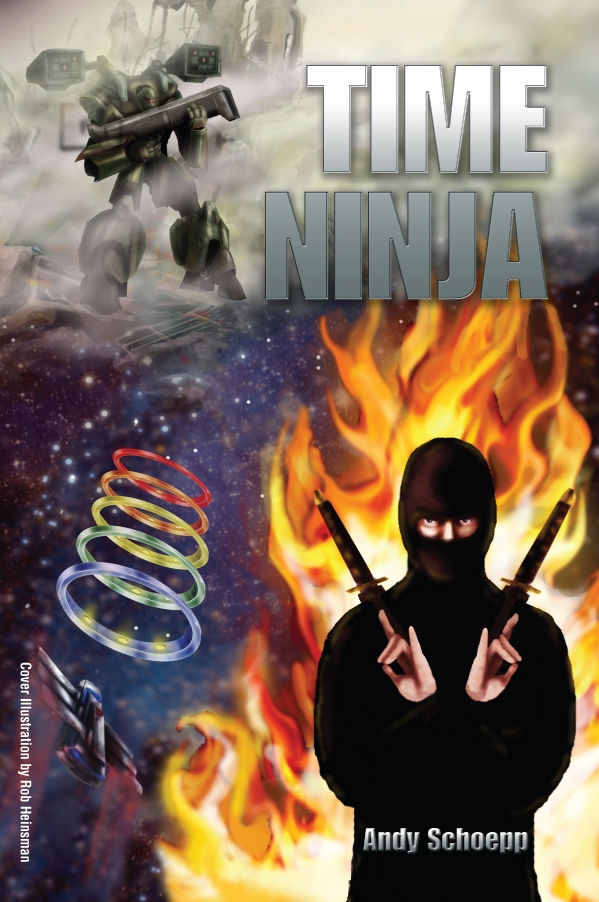
Stimulus: Andy Schoepp – Time Ninja

Anno: 2010


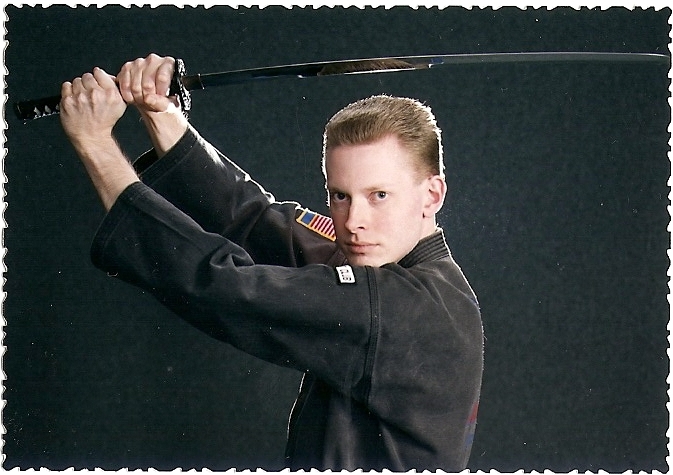
Andy Schoepp’s first novel, The Martial Arts Murders, will always have a special place in my heart.  Having spent long periods of my life as a ninja film nerd, the blend of frantic martial arts action, frenzied screw scenes, and unapologetic machismo featured in this debut was right up my alley.  That said, while The Martial Arts Murders is my favorite of Schoepp’s work, I’d have to say that Time Ninja is his best work.

The trilogy that Murders commenced was hyperactive and occasionally flirted with science fiction, but it was also grounded in the geography and circumstances of the modern world.  Beyond the action, these books were essentially mysteries.  In Time Ninja, Schoepp finally leaps into the deep end of the sci-fi pool and gets his hands dirty with world-building.  The story begins with a ninja feud, a few decades from now, which propels the titular ninja, Ryu Kendo, into a future dystopia and the real focus of the plot.  It’s still Earth, but not the Earth as we know it, and it’s fascinating to see how he tweaks the planet.

I’m going to throw this out there, not as a specific criticism of this book but of the gimmick as a whole: no matter the medium, time travel usually doesn’t work well in fiction.  Loose ends and paradoxes tend to pop out and distract the audience from the narrative, and inevitably it becomes a cheap way to erase some awful thing that happened earlier (a step up from those catastrophes being a dream).  Time Ninja sometimes falls victim to these issues, but it’s to Schoepp’s great credit that he shows restraint and doesn’t get tangled up in gimmick. Time Ninja is noticeably more Ninja than Time, to its benefit.

With that in mind, the catastrophe erase which happens in this book actually leads to something I ended up liking a great deal.  In his Murders trilogy, Schoepp’s hero, Detective Michael Darts, was an unfailingly stand-up guy, the sort who held doors for ladies, helped grannies cross the street, and rescued kittens stuck in trees.  Yet in his quest to make everything right, Time Ninja’s hero flips out in a rather irrational manner, and he quickly descends into the moral crossroads of Dickhead Ave. and Monster Blvd.  Things get sorted out, of course, but I really enjoyed the temporary gray area where it wasn’t quite clear if Ryu had become the villain.

Beyond all this, Time Ninja is everything I’ve come to expect from an Andy Schoepp book: supersonic action, verbose dialogue, and, of course, the banging of hot babes.  But the new elements are equally intriguing.  I’d really like to see more science fiction out of Andy Schoepp.

Y Spy: Andy Schoepp, Time Ninja

As has become tradition, when Andy Schoepp releases a new book, I email him a few questions about the work, which he answers at his leisure.  That tradition continues with the completion of Time Ninja, leading to a discussion about time travel and publishing pitfalls.

Y Spy: How did Time Ninja come about?

Andy Schoepp: If you read the introduction to Time Ninja you will see I actually began work on it BEFORE I started working on The Martial Arts Murders.  I had the first three chapters of Time Ninja done when I began working on The Martial Arts Murders instead.  What prompted that decision was the fact that I had an outline of Time Ninja done and I knew the task was going to be daunting and as a new writer it scared me a little to undertake such a huge novel.  Besides, I didn’t like how I had written the first three chapters of Time Ninja so I thought maybe if I worked on The Martial Arts Murders books first (I had planned for them to be a trilogy from the start) that I would be a more accomplished and a better writer when I was done so I could do a better job with Time Ninja.  I worked on Time Ninja in bits and pieces while I wrote Life and Money Heist and Moral Executioners and when I was done I just had to go back and revise the portions of Time Ninja that were already done with my improved writing style and just complete the project from there.

Y Spy: How does one become a Time Ninja?

Schoepp: Actually, it would be impossible right now.  First, it takes 20 years of training to become a ninja and second, nobody has invented time travel yet.  That is why this novel is in the Science Fiction genre.

Y Spy: How do you work time travel into an action story?

Schoepp: I used it as a vehicle to try to put two things together that normally wouldn’t be able to coexist together.  In the case of Time Ninja I had to use Science Fiction and time travel in order to pit Ryu against high-tech weaponry.  And in order to pit him against the KIND of high-tech weaponry I wanted to use, it would have to be done in the future.  I would NOT recommend using time travel in a novel however.  It creates story and logistical challenges that will give a writer headaches and drive a person to drink (luckily I’m not much of a drinker).  This is also why I’m glad I put Time Ninja on the shelf and went ahead with The Martial Arts Murders trilogy first because there is NO WAY an inexperienced writer could have handled the logistical problems in Time Ninja, it would have been a huge mess and a disaster so I’m glad I waited with Time Ninja.

Y Spy: What research and ideas on time travel did you bring into this?

Schoepp: I didn’t really do any research into time travel.  If you’ve read the book, you’ll know that I went to great lengths to make the method of time travel in the novel as unique as possible.  In most stories involving time travel there was always some type of vehicle characters rode in to travel through time.  In Time Ninja, I had a time module that sends people and things through time without a vehicle or without the character riding in something.  The time module sends people and things through time but it stays behind.

Y Spy: What influenced you in the writing of Time Ninja?

Schoepp: I wanted to write a novel that was heavily weighted with Ninjutsu as opposed to just the martial arts in general.  Yes, I had Sho Katarugi in The Martial Arts Murders but I wanted to write a novel that was a mix of Ninjutsu and Science Fiction.  A Science Fiction novel allows the writer to incorporate futuristic weaponry and pit it against the ancient arts and techniques of Ninjutsu and this is where the idea for Chapter 18 entitled Armageddon came from.

Y Spy: Describe the transition from writing a trilogy of shorter stories to writing a larger yet independent novel.  Did you take a different approach?

Schoepp: Not really.  I have outlines and notes in my desk from each of The Martial Arts Murders trilogy novels and my outlines and notes for Time Ninja are just longer and there are more of them.  They’re also complicated too so nobody else could understand them, I even have outlines and notes that refer to other outlines and other notes to try to keep the time travel and the plot straight.  I also have a half a sheet of paper in my desk with calculations involving years and characters’ ages.  I stress again, I gave myself a headache more than once working on this novel and I do NOT recommend a new wirter trying to work on a novel like this.

Y Spy: How is Time Ninja different from The Martial Arts Murders?

Schoepp: Obviously Time Ninja is more in the Science Fiction genre where as The Martial Arts Murders trilogy novels are more in the action/adventure and police drama genres.  Time Ninja is a little bit darker and doesn’t have as many fun or comic relief moments like The Martial Arts Murders trilogy does (don’t get me wrong, The Martial Arts Murders trilogy are serious novels, but I added a few moments of comic relief and had some fun for the characters and there is less of that in Time Ninja, it’s less forgiving.)  Otherwise it is longer in length and scope so it is more epic.  I also left Time Ninja open for a sequel but it can also stand on its own so no fear of a cliffhanger or nagging feelings or anything like that.

Y Spy: You’ve mentioned that the process of getting Time Ninja out was longer and more difficult than those of the Martial Arts Murders books.  What happened?

Schoepp: Oh brother, let me see if I can list everything that went wrong with this book.  First I had an argument with Outskirts Press about combining a 40% trade discount with a retail returns contract, then my author representative from The Martial Arts Murders trilogy got a promotion so I had to work with a new author representative, then I ran into technical problems with Outskirts Press’ website in the pre-production phase, the cover had to be hand-drawn and proofs were coming in two week intervals from black and white to what you see now, then Outskirts Press refused to format the interior of the book until the cover was done, once the interior was formatted it was formatted wrong twice, then I had so submit 338 edits (that was my own damn fault though) and all of these 338 edits had to be done during Thanksgiving with my day job being in sales.  Not to mention all of the other small things that needed to be addressed when in the publishing process.  Yeah, getting this novel out was not easy but I think it was worth the wait; I’ll just have to wait to hear from my fans to find out if it was worth the wait.

Y Spy: Time Ninja’s physical release sells for a much greater price than your previous books.  Why is that?

Schoepp: First and foremost it is obviously a much longer novel (550 pages versus an average of 275 pages for the three books in The Martial Arts Murders trilogy).  And the trim size for Time Ninja is 1/2″ wider and a full inch taller so it is a mammoth novel (you almost have to hold a physical copy in your hands to understand how long this book is).  To put it into perspective, the Microsoft Word draft of this book was 726 pages that’s 8 1/2 X 11, double spaced with no headers or footers.  Also, in an effort to get the book into more bookstores, the book has a 40% trade discount (which means retailers get 40% off of the cover price when they order it for store stock).  Time Ninja also has a retail returns contract on it (which means retailers can return the book to Ingram if they have too many copies that are not selling).  These three factors, size/length, 40% trade discount and returnability all contribute to a higher retail price.  The cover art and the interior formatting alone though are worth the price of the book.  If you look at the interior formatting, you will probably be hard pressed to find a book that is as nicely done and as unique as Time Ninja.   It is indeed a handsome novel to have on your living room table or bedroom nightstand.

Y Spy: Do you still believe in working through an independent publisher?

Schoepp: Yes.  The problem with commercial publishers is if you are not already famous or a criminal (i.e. Balloon Boy’s parents) it’s almost impossible to even get an editor from a commercial publisher to even read your manuscript.  It seems like commercial publishers are only interested in making the rich and famous more rich and famous and giving people who commit crimes the notoriety and publicity they want.  Almost every time you turn on the news you hear about some criminal who just signed a multi-million-dollar book deal through a commercial publisher.  It seems like commercial publishers are more interested in celebritizing criminals and rewarding illegal behavior than helping unknown, law-abiding citizens.  Independently published books still have a chance of being picked up by a commercial publisher and that is what I’m working towards.  You have a better chance of getting published commercially if you have an independently published book than you do if you just let a manuscript sit in a desk collecting dust.

Y Spy: With the field of literature becoming more electronic, what is your opinion on electronic books?

Schoepp: I have no problem with electronic books.  In fact, there is a Kindle edition of Time Ninja available on Amazon.com.  There is also an e-book edition of Time Ninja on my author’s website at www.outskirtspress.com/timeninja.  There are however benefits of holding a physical book in your hands instead of an electronic device with the pages appearing on a screen.  A physical book requires a book mark and when you put it into the book you get a sense of accomplishment when you place it in the book, you can tell how much ground you covered since the last time you put it in the book.  There is also no substitute for the feeling you get after reading that last page and closing the back cover of the book.  I have no problem with electronic books though, I actually embrace the technology.

Y Spy: So the big writing projects you’ve been planning since the beginning of your writing career have been completed.  Are you going to continue writing?

Schoepp: I am still writing.  I am working on a collection of short stories in the Horror genre, another martial arts related novel that will be shorter (more like The Martial Arts Murders novels) and a sequel to Time Ninja.  I think I am going to put those other two novels on hold and work more on the sequel to Time Ninja, I did leave some questions unanswered so I want to get that sequel out there sometime in the future to tie up the loose ends I left in Time Ninja. If you have not read Time Ninja yet do NOT be afraid, I wrote Time Ninja so it CAN stand on its own so don’t worry about having a Matrix or Pirates of the Carribean let-down at the end.

Time Ninja is available now at Barnes & Noble and amazon.com.

Bizarro Masterpiece Theatre: The Maddams Family

Film: The Maddams Family (1993)

Director: Herschel Savage

Starring: Ona Zee, Mike Horner, Ron Jeremy

Written by: Cash Markman


Beyond function, I don’t really care about porn.  I like the absurd stories and personalities which populated smut of the 70s, but otherwise it’s all interchangeable to me.  I guess I’m of the opinion – in both life and in porn – that if a person doesn’t have anything interesting to say, then shut up, get to business, and stop trying to make yourself a star.

Still, there’s always been one dirty film which never fails to bring a smile to my face when it comes to mind: a wonderfully absurd parody of The Addams Family in which the family opens up a whorehouse.  For some reason I’ve always found porn parody names to be hilarious (see: Forrest Hump, Spongebob Sorepants), and in its own Oscar Wilde-like wordplay Maddams Family delivers.  The whole Addams clan gets new names: Morticia is now Whoreticia, Lurch becomes Crotch, Cousin It is, well, I’m sure you can guess.  And that disembodied hand that was an Addams family hallmark – guess what it does.

The stars of the show, however, are Cortez, the Maddams patriarch, and moronic man-child Uncle Pester, played by Ron Jeremy.  While Pester’s bumbling eroticism and comparisons of sex acts to ice cream are delightful, the swashbuckling Cortez is just brilliant.  Actor Mike Horner could have coasted on a pinstripe suit, pencil mustache, pilfered lines, and a boner, but instead his Cortez runs on all cylinders: cracking wise about the arms industry, somersaulting around his backyard, competing in what is essentially a one-man fencing match with his Frankenstein butler, and engaging in some fine spastic humping.  The man is gold.

I’ve always thought that porn actors are kind of like stand-up comedians, and that there ought to be an element of comedy involved in the act of screwing on camera.  The Maddams Family seems to agree with me.  I’ve seen a great many mainstream comedies that made me laugh far less than this dirty film.  The ability to get off to it is a strong bonus.

Y Marks the Spot: The Token Revolutions

This is what freedom looks like.

Allow me to provide a cynical attitude towards the so-called civilized world’s supportive responses to the uprisings in Tunisia and Egypt.  These revolts, portrayed as grass roots movements of the people in response to repressive leaders, have been hailed by governmental PR folks as noble exercises in liberty.  In sanctimonious tones, America’s spokesmen pledge our lip service support to these embattled people as they struggle against armed and licensed to kill oppositions.

Not being intimately acquainted with the motivations or politics behind either movement, the only response I feel appropriate for me to have is that I’m guardedly glad that these people are standing up for themselves.  However, it strikes me as fairly ridiculous that America seems to be hitching its moral wagons to Tunisia and Egypt without actually doing anything to help.  Just as sports fans use the Royal We in describing their favorite teams, quite a few spectators of democracy seem to have the attitude that a victory for the people of Tunisia and Egypt is a victory for lovers of democracy everywhere.

I’m sorry to burst the bubble of those whose biggest worry in life is who wins the Super Bowl, but unless you’re on the field, you will never win a game.  Likewise, it’s easy to cheer on the cause of democracy and the advancement of civilization in impoverished countries when you’re not actually there doing the work.  And as great as many things are about America, one of its greatest faults is that its people have become a nation largely comprised of spectators.

I’m no different.  I remember watching the madness that followed Iran’s presidential elections in 2009, in which Mahmoud Ahmadinejad won a pretty sketchy re-election.  People lost their goddamn minds and took to the street, risking injury and death against government forces and deputized goon squads – and sometimes getting it.  I followed all the chaos, awe-struck, wondering why this explosion of democracy never happens in America.  You know, like in 2000, when our own divinely ordained doofus won the presidency under dubious means.

But that’s not our style anymore.  Activism has been outsourced.  Much of the reason for that is because we’re very safe (and we have all of that delicious safety to lose).  Most citizens of the world’s most advanced countries don’t live in fear of cops bursting through their doors and gunning them down.  Oh, they’re repressed, but they’re not violently repressed.  The groupthink required to spark these massive demonstrations is pretty much incapable of getting fired up over vague concepts like wage slavery, economic warfare, bailout heiresses, censorship, and corporate mismanagement – and it’s even more difficult to get people to stand up if they first have to put down their computers.  It’s hard to get people into the streets without a visible atrocity – and even then, how many of us watched Columbine, 9/11, Hurricane Katrina, and the BP oil spill as though they were fictional news channel sitcoms?  I know I did.

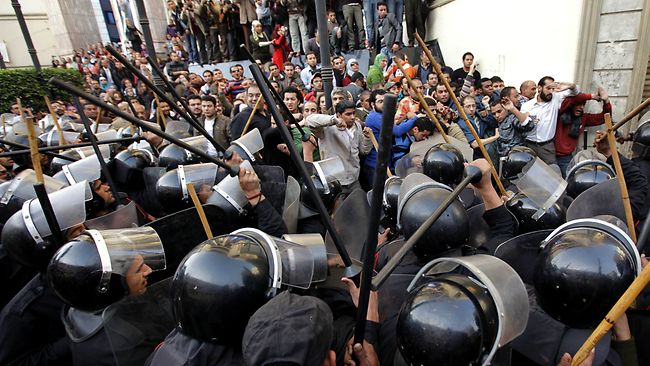
Another reason why Americans don’t take to the streets and howl for liberty might be because the cops would call it a riot and club, tear gas, and tazer all the protesters until it was squashed (see: WTO Protests, Seattle, 1999).  Just like what’s happening to those citizens of those fine countries the free world is currently rallying behind.  Democracy is a fine idea, but a government’s a government, power is power, and job security often masquerades as national security.  I’ll say this until I die: the main difference between good and evil as they’re commonly defined is opportunity.

American culture proclaims that one revolt was good enough.  On the subject of national misbehavior, America is the equivalent of that old hippie who talks your ear off about how he fought The Man back in the 60s, though these days he spends his days crusading online for the legalization of pot.  We all think we’re rebels, with our countless ways of self-customization that tell that big, uncaring world that we are different, we are special.  But (fully anticipating the English majors) democracy and freedom – two quite opposite concepts, actually – are meant to be verbs, not adjectives, not static possessions.  They aren’t found in the spoiled and often psychotic posturing of wannabe Founding Fathers like those you find in the Tea Party.  They’re not found on the computer screens of those sanctimonious lefties who feel that all it takes to bring reason and light to the world is a well-placed Tweet blasting said Tea Party or some other conservative sacred cow.  Yes, speech is a vital part of exerting one’s freedom, but pointless, entitled, and actionless speech is often worse than silence.

If there is any aspect in our sanitized world that holds the exciting danger of real revolt, I’ve found it in the recent phenomenon of internet whistleblowing personified by Wikileaks.  I love that for quite a few of us who live in a country where free speech is such an unquestioned right that corporations were allowed to enact a hostile takeover of it, websites that dare to call bullshit on the objectionable excesses of those in power are somehow beyond the pale.  Love them or hate them, the people running these sites are the new poster children of First World revolt, putting themselves in real danger for a cause they believe in.  And if this phenomenon becomes a subculture of leaderless, permanent vigilance, so much the better.

Problem is, it’s easier and more encouraged in America’s modern culture not to be this brave.  Instead, it’s easier to jettison our convictions when they become inconvenient, when we clock in for work, when we’re put out in public, when there’s a chance someone – anyone – will disapprove.  As much as we bitch, there’s such an air of resigned depression in our culture that not only recognizes but tolerates the banality of evil.  That’s a sure sign of a civilization’s decline.

The Designer’s Drugs: Scarlett Thomas – Our Tragic Universe

Medium: Literature

Stimulus: Scarlett Thomas – Our Tragic Universe

Anno: 2010


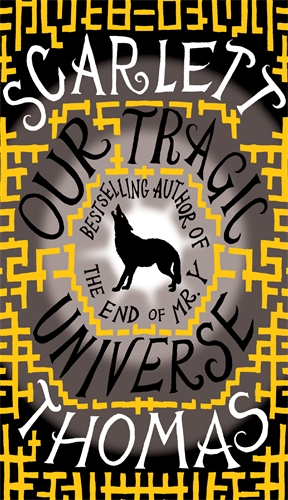
There’s a point toward the end of Our Tragic Universe where the protagonist, a disappointed author of genre fiction, advises a peer to cloak his nonfiction research in a fictional clothes.  The reason behind this proposed deception is that while most people approach nonfiction with a critical eye and aims to disprove its theories, people tend to approach fiction in the opposite direction, ready to put all the pieces together in the way that most makes sense.  It’s clear that this attitude colored the entirety of Our Tragic Universe, which is ostensibly fiction but also brings to bear many philosophical asides.  It’s in many ways a mixture of Scarlett Thomas’ previous works, mixing the crippled and frustrated storytelling of Going Out with the metaphysical and sexual End of Mr. Y. Sometimes the mixing gets a bit jarring, the narrative and human lives suddenly getting usurped by discussions on the nature of reality.

To be honest, it took me the better part of the first hundred pages of Our Tragic Universe to get behind the story.  In this opening, the author in question, a late thirties DIY chick named Meg, tromps around her small town, poking her head in and out of the local dramas of her friends and fellow esoterics.  Most of these people are a combination of frustration and insanity, usually attempting to screw, scream, or bullshit their way to a state of distraction.  It’s kind of a depressing slog at first, but as I was trying to work my way through I came to a realization.  It’s about failure. After my change in perspective, Our Tragic Universe became rather wonderful.

I should have picked up on this point earlier, when Meg recalls a vacation in which she as a child met a pair of magical – possibly mythical – people out in the middle of nowhere.  At the end of her vacation, the man of the duo tells her that she would come to nothing.  And really, this sets the tone for the remainder of the book, in that Meg’s purpose here is to discover what nothing really is and how that doesn’t have to be a negative concept.  Slowly and with the assistance of some events that may be either simple fortune or supernatural intervention – an ambiguity which is purposely unanswered – Meg begins to dispel her life’s inertia.  It’s likely that in my accepting that this book was about failure, I set myself up to be satisfied when the main character outgrows her nothingness and gives evidence that it’s never too late.