Y Marks the Spot: The Bullshit Addict

When I came up with a new personal code of conduct this past January, I placed the most value not on what I wanted to accomplish, but how.  As such, the most important rule I set for myself was to not be frustrated when (not if) I failed to immediately live up to all my expectations.  Having been fueled by frustration for most of my life, I have an annoying and highly self-destructive tendency to throw all my hopes and plans into the dumpster at the first setback.  Usually this comes about because I become willingly distracted by some stimulus and forget about all the big things I want to accomplish.  The stupidity comes about when this sloth frustrates me into giving up and engaging in further, more depressed sloth.  The result of this cycle often becomes that I get so spun around that, when the distractions are all conquered, I’m left with no idea of what to do next.  This is where I’m currently at.

I am a junkie, not for alcohol or drugs, but for bullshit.  I’m not being melodramatic or romanticizing the situation at all.  My sense of obsession is titanic, and rather than use that potentially wonderful quality to fulfill all the big goals I want to accomplish, I derail myself at any given distraction.  The title of my stimulus review column, The Designer’s Drugs, is not so much a clever, rebellious name as it is an admission that entertainment can – and often does – become an addiction.

Even now, even as I’ve outgrown a lot of my past stupidity, I’m fantastically addicted to addiction.  If I’m playing a video game, I tend to complete every side quest and every achievement.  I loathe watching television shows because watching every episode in a series takes too much time and effort, and with TV shows, if I’m in for a penny I’m in for a pound.  I spend hours, days, weeks, and months on the internet doing little more than absorbing trivia, yet I find that I don’t know how to turn off the switch.  I’m brilliant, in all the wrong ways.

My current theory is that all of this comes from a feeling that all stimulus is there to be consumed or conquered, which isn’t surprising considering that I was raised by video arcades and Nintendo.  It’s this line of thought that justifies why I stopped buying cigarettes, as I’d go through a pack a day simply because it was there.  It makes much more sense for me to pace myself and steal cigarettes from my friends.

So if I can view every aspect of my life in gaming terms – winning, losing, high scores – is it possible for me to enjoy life as it is?  Whether won or lost, a game is over.  Life isn’t really like that, as I’m coming to realize.

But strangely, awkwardly, and full of failure, I’m getting better.  Sometimes.

My only rationalized consolation for the time I wasted between January and now is that most of the wasting went according to plan.  During that period, a few video games came out that I knew would be awesome, including a remake of one of my favorite games ever, Final Fantasy IV.  I consciously decided to get these games, and didn’t feel bad about it at all.

Perversely, this is a drastic improvement over the days when I would buy crappy entertainment of any kind simply to get new things.  At least I wasn’t wasting my time on consuming something I didn’t even really like.  This is me maturing.

Unfortunately, my taste in games runs toward epic strategy games that take weeks to complete, so even my reasoned decision ended up with me playing these games from waking to sleep, for days at a time.  I wasn’t frustrated by this, but I sure wasn’t being fulfilled, either.

Equally unfortunate was what happened once I emerged victorious and had no more worlds to conquer.  When the last game was finished, I had no desire to get another throwaway game, to watch throwaway television, to drown in the throwaway internet.  I was done being entertained, and I had no idea what to do next.  Victory had crippled me.

I’ve spent the time since reading, in my conquering junkie style, but I’m not reading mindlessly or gluttonously.  Soon the books I’m working on at the moment will run out, and I’ll be in the same position I’m in with all the other forms of entertainment, not knowing how to flip the switch from mindless reception to brilliant transmission.

I’ve spent a month trying to figure out the answer, but in that time I feel like something might be building, if I allow it to.  The temporary breakdown of my brain I’ve been slogging through has sucked, no doubt.  But it may have been necessary.  I’ve always been kind of an idealist nihilist in that I feel that I’m at my best when I have nothing.  Maybe this is the nothing I’ve been waiting for.

Bizarro Masterpiece Theatre: Jammin’ George’s Very Jammin’ Christmas

Ho! Ho! Ho! Merry Flag Day!


Film: Jammin’ George’s Very Jammin’ Christmas (2011)


It’s entirely in keeping with everything I know about the great Jammin’ George that he would send me a Christmas-themed video at a time nowhere near the holidays.  It’s both an absurd decision and a delightful one.  Very Jammin’ Christmas is a quick burst of Jammin’ George’s comedic genius largely infused with (though in no way limited to) Yuletide spirit.  While this 10 minute show doesn’t have the variety or the sheer mindfucking of George’s hour-long epic, Jammin’ George’s Land of Fun, it is a joyous bit of goofing around.

As opposed to the greater diversity of that epic, George’s tribute to Christmas largely sticks to quick impressions and snippets of song.  He does bring back a few classic bits from Land of Fun, one of which is appropriate for the Christmas theme and the other so weird that I’d watch it a thousand different ways.  The first is Jammin’ “George’s 12 Days of Christmas,” featuring George reading down a list of things that make the holidays great, including hot body poses, quenching Orangina, and falafels a-falafeling.  The weird bit is George showing his audience how to make toast.  There’s no swerve; it’s simply George putting bread in a toaster and buttering it when it comes out.  But he’s pumped about it, which sells the entire bit and makes it hilarious as well as bizarre.

His new bits are more or less Christmas-based, the most notable of which features George as the fourth wise man, late for the nativity and looking for a good place for falafel.  He also does a wicked impression of Ebenezer Scrooge.  Still, some of my favorite bits ended up being the times when he’d go off topic.  There’s a great joke about George’s dad being a hedge fund guy before it was cool, and he does a sweet impersonation of Daniel Plainview from There Will Be Blood.  Then there’s George’s weird, mild-mannered rant about going on a bus ride and not getting a tuna sandwich that was promised him, which would have been out of left field from a lesser comedian.

I do wish that George would have gone longer on this video and diversified his skits a bit more; there’s so much more holiday-themed gold that the man could have mined.  I am more of a fan of Land of Fun, but Very Jammin’ Christmas is a good introduction to those who haven’t seen that masterpiece, as well as a great companion piece for those who have.

The Designer’s Drugs: IamX/The Sounds

Medium: Album

Stimulus: IamX – Volatile Times

Anno: 2011


Compared to its previous releases, the latest album from IamX plies a slightly more subdued brand of electrogloom.  The grandiose intensity and orchestration characteristic of IamX remains; all that has changed is that Volatile Times is more menace than fury.

Still, what fury does exist here more than makes up for the rest of the album’s comparative calm.  “Cold Red Light” is a brilliant mixture of snarling robotics that evokes the very best of David Bowie’s forays into industrial music.  The album’s title track is a bouncier blast of big band pop which merges well with the whispers and screams in Chris Corner’s vocals, and “Ghosts of Utopia” is a darker and more stripped-down version of that song.

The calm parts are equally deft, and as has become tradition, the final track is especially breathtaking.  In this case, the track is titled “Oh Beautiful Town,” and it exemplifies all that grandiose intensity and orchestration that sets IamX apart.  It seems that with each release, this entity drifts further from beeping masochism and pretentious darkness, and it moves further into these big, beautiful songs – and that’s a wonderful thing.


Medium: Album:

Stimulus: The Sounds – Something to Die For

Anno: 2011


I’m not sure if the Sounds’ mutation from electrorock to electropop makes much of a difference.  Sure, the keyboards on this album completely dominate the guitars and there are a few tracks here that seem more radio-calculated than usual, but the band’s instrumentation was always so poppy that the difference on Something to Die For is a question of degrees, not absolutes.  The Sounds haven’t changed their style; they’ve simply arrived at its next logical conclusion.

In any event, the best songs on this album are more pop than rock.  The first two tracks are the album’s zenith, as the darkly ravish “It’s So Easy” leads into the bright orchestra pop of “Dance with the Devil,” and both shine.  “Yeah Yeah Yeah” is a straight-up 80s drum machine dance anchored by hate and Prince-namedropping in the vocals.  Even the best rock song, “Diana,” sounds a bit New Order in the basslines.  In fact, the songs that do sound like typical punky Sounds – especially “The No No Song” – feel pretty average.

There’s little on Something to Die For that is mind-blowing, but it’s a solid experiment that neither destroys the established formula nor stagnates in it.

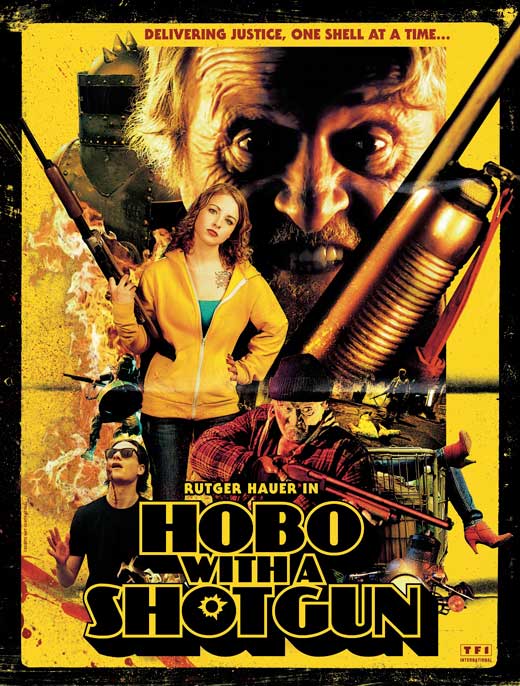
Bizarro Masterpiece Theatre: Hobo with a Shotgun

Film: Hobo with a Shotgun (2011)

Director: Jason Eisener

Starring: Rutger Hauer, Brian Downey, Gregory Smith

Written by: John Davies

Flat out: Hobo with a Shotgun made me feel good to be alive.  It’s the most wonderfully ridiculous film I’ve seen in ages.  A perfect mixture of dirtbag 80s vigilante cinema with the sort of bloody exploitation flick that most filmmakers totally fuck up by trying to play it cool, Hobo’s secret ingredient is its winning personality.  While there’s no shortage of tits and blood to be found here, those elements aren’t crammed down the viewer’s throat to compensate for the rest of a dull fucking movie.  Instead, the creators of this instant classic are obviously great big wonderful dorks, and it’s clear that their first and foremost goal in making Hobo with a Shotgun was to have the most fun they could possibly have.  They succeeded.

There’s something almost Road House-esque about the resulting hour and a half of cinema, featuring Rutger Hauer rambling around the urban decay as a half-crazed train-hopper.  Hauer’s unnamed vagrant hobbles into a town ruled by the razorblade fist of a murderous tyrant, and after a brief and ill-advised period of trying to get by unscathed, our hobo hero finds his trusty shotgun and trusty hooker sidekick, and he goes on a philosophy-and-pun-fueled ass kicking rampage.  Sure, Swayze’s Zen bouncer was a touch less schizophrenic than Hauer’s glass eating Hobo, but their hearts are filled with the same triumphant justice!

Our Hobo’s epic saga is fraught with awesome villainy.  The city’s genocidal dictator is a Napoleonic imp on an endless seizure of spastic screaming, and his demon enforcers, two walking suits of murder armor, are completely kickass.  The cream of the scum, however, comes in the form of the two sons of the dictator, a pair of letter jacket and sunglasses-at-night sporting yuppie bastards who wreak bloody entitlement with the greatest of glee.  These jerks are responsible for most of the film’s greatest moments, including its zenith in which they take a flamethrower to a bus full of kids while getting down to “Disco Inferno.”  It might have been a gruesome scene if it wasn’t played so silly.

In Hobo, the absurd is everywhere, and it’s hilarious.  I’m not sure I’ve ever seen a movie with so many fantastically bad one-liners, and the shit which comes out of these characters’ mouths is the gold which steers the ship.  The Hobo’s behavioral idiosyncrasies and violence so over the top as to be rendered slapstick only enhance the film’s sense of nonsense.  For all of its hoboeroticism, I love the shit out of Hobo with a Shotgun.

Y Marks the Spot: Conservatives, Heal Thyselves

Only this man is exempt from what I'm about to say.

Any group of any kind is only as legitimate as its loudest, dumbest, most destructive member.  When this rule is applied to today’s Republican Party, well, shit.  America’s doomed.  Let’s call a spade a spade: the official party of the right wing has become the party for ignorance, the party for imposed desperation, the party for small affluence and widespread poverty, the party for theocracy, the party for serfhood and feudalism, and most importantly the party that cannot exist without an ocean of second-class citizens.  It’s not even that good at enacting its much-professed ideals of fiscal responsibility and anti-bureaucracy anymore.  And somehow, this party tends to get its way.

What pisses me off most about all this is that the Republican Party is now the party of the insane.  The political buzzword used to be the naïve, idealistic Bleeding Heart Liberal, but with the infestation of the Tea Party into Republican politics, today’s political jackasses tend to be Heart Attack Conservatives, people who care less about facts and self-interest than they do about having a platform to screech and hate.

The worst thing about the real life internet trolls of the Tea Party is that they’ve become a black hole in the public discourse.  They’re the loud, disruptive kids in class who derail the teacher and prevent everyone else from learning.  Scratch that; they’re the loud, disruptive kids in class who infect everyone else in class until all that’s left is a classroom full of shrieking idiots drawing dicks on the blackboard.  And like all things zombie-related, there’s a huge audience that hangs on their every act of faux-rebellious douchebaggery.

The obvious victims of this outbreak are gays, Mexicans, Muslims, women, the poor, the compassionate, and the sane.  But I’m wondering if an equally important victim of the unhinging of the right wing is the right wing itself.

I’ve been watching the looming embarrassment that is the 2012 presidential election cycle, in which the few Republicans who are gearing up to run against Obama are doing their best to out-crazy one another.  It’s awful.  Only in a politically retarded landscape as ours could a batshit vampire lady like Michelle Bachmann gain any sort of credence among those who don’t sleep in padded cells.  Worse still, we have one of the richest men in the world, Donald Trump, running on a platform of lowest common denominator and howling about Obama’s birth certificate in a thin attempt to slum with the crazies.  At the moment, these people are the front-runners, which to me speaks ill of America on the whole, not just the Republicans.

It might be satisfying to anticipate the Wagnerian spanking the Republicans will receive in 2012 if these candidates are the best it has to offer, but I can’t shake this sense of something approaching disgusted pity for them.  (The image in my head is of how I’d react to a shit-covered schizophrenic who just punched me in the mouth, if that helps.)  I’ve never, ever liked the Republicans, but when there’s an election, I expect each party to put forth the most competent candidate they have to offer.  I demand real Republican candidates, not crackheads who would have been laughed out of any other race in history.

The problem is ultimately larger than the right wing.  The public doesn’t want competence or ability; they want elected officials whom they can have a beer with, representatives who are just folks, rulers who are just like them.  Let me say, at the top of my text lungs, that the Beer Standard is the most bullshit criteria in politics (and not just because I’m a vodka drinker).  I don’t want elected officials to be just as good as everyone else.  I’d like them to be a damn sight better.

I never believe that a political pundit is as nuts as he or she appears to be.  I guarantee that if the Beer Standard wasn’t the law of the land, most of our Republican candidates for president wouldn’t be locked in this quagmire of Tea Party-calculated psychosis.  Our country might have a good deal more self-respect.

I might be wrong, though.  Maybe it is a good thing that the worst of the right wingers have gained the overconfidence to expose themselves as the repressive cavemen they are.  I know that time gives things that were intolerable in the present a sort of respectability in the past (see: George W. Bush, the Backstreet Boys), but the McCarthy, Goldwater, and Reagan Republicans weren’t any more saintly for not having to appease all the raving lunatics.  It’s not as though most of the Tea Party’s cells, despite their claims to be grassroots movements, aren’t corporate funded screechshows.  The tactics may have changed, but maybe the right wing is running the same plan as ever.

Yet assuming that the madness of the last decade isn’t an insidious Republican conspiracy to keep people angry and distracted, it’s not the liberals who must be the key players in curbing the Tea Party.  In his conflicts with the wild and populist movements during his presidency, Nixon appealed to a “silent majority” of sober, conservative Americans to stand up and be heard.  That’s precisely what is called for in this moment – a real conservative movement, comprised of people more concerned with policy over polarization, which will stand up and put the Tea Party infants (and, ideally, the Republicans they rose up against) back in their cribs.  The liberals can laugh and mock and loathe all they want, but ultimately it is the right wing which is responsible for cleaning up its own mess.

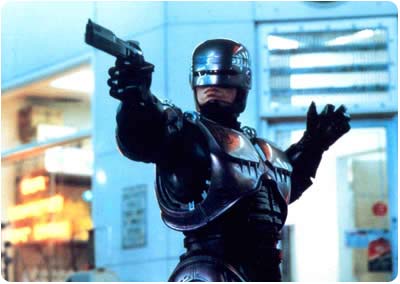
Bizarro Masterpiece Theatre: RoboCop

PUNK AS FUCK.

Film: RoboCop (1987)

Director: Paul Verhoeven

Starring: Peter Weller, Nancy Allen, Kurtwood Smith

Written by: Edward Neumeier, Michael Miner

It can be a great thing to watch a movie as a child and see one film, and then watch it again as an adult and see something completely different.  It’s kind of appropriate, given the current state of our country, that I recently rediscovered this classic tale of American decline.  The dirty cyborg ultra-violence in the RoboCop film series morbidly evolved into a sleek kid’s franchise (which I, as a one-time aspiring robot policeman, loved), but the real genius of this toy robot flick is in the subtext.  Like John Carpenter’s They Live, which on the surface is an alien invasion story and an epic alleyway brawl, RoboCop has a heart of punk.

Its great subversion is envisioning the end result of Reaganomics, a world of gas-guzzling wrecks and corporate feudalism.  Detroit and its media serve as a microcosm for the rest of the nation, with talking heads attempting to distract the peasantry from the cataclysm surrounding them.  The Benny Hill-esque TV pervert who chuckles “I’d buy that for a dollar!” is actually a fairly sinister figure in a society where businesses own everything worth having and leave everything else to rot.

The twin cancers of unchecked privatization and overblown defense spending come to a head in RoboCop, as Detroit’s largest corporation buys out the city’s police force and begins a process of replacing the beat cops with massively weaponized machines.  Executives scheme against each other in each one’s attempt to get his pet project greenlit, yet the flaws of a drone police force are immediately realized when a boardroom demonstration ends with a walking tank glitching and gunning down a hapless executive.

RoboCop comes about as a direct result of that incompetence.  He’s a step up from the walking tank due to his consisting of a human mind placed in a robot’s body.  The acquisition of the murdered policeman who would be RoboCop leads to another interesting moral dilemma: the question of human beings as property.  It’s assured by the tech people that RoboCop will not have the memories of his former life, but of course that isn’t how things turn out.  However, that doesn’t stop the corporation from treating RoboCop, memories or no memories, as their product, to use and abuse at will.

Of course, RoboCop gets all triumphant action hero, putting his boot in Red Forman’s ass, causing one of the most disturbing toxic waste spills in film history, and generally saving the day.  Yet the underlying theme of unchecked corporatism in RoboCop is much more interesting (and relevant) than the game of Cyborg Cops and Robbers that it disguised itself as.  Clever trick!

The Designer’s Drugs: Tina Fey – Bossypants

Medium: Literature

Stimulus: Tina Fey – Bossypants

Anno: 2011

This half-biography, half humor book from America’s reigning comedic mind alternates between being too short and running at just the right length.  If one is looking for Tina Fey to give a detailed, minute by minute account of her life and career, well, that didn’t happen.  When she does talk about herself, Fey gives a Cliff’s Notes version of her life: childhood, awkward dates, Second City, getting hired at Saturday Night Live, the process of creating 30 Rock, and her Sarah Palin impersonation that became one of the most notorious aspects of the 2008 presidential election.  Yet it seems obvious that the biography parts, especially the personal, serious bits, were written with great reluctance and as necessary evils.  With the exception of describing work-related stress, she tends not to dwell on feelings and sticks to the facts when the big picture is called for.  As such, there are brief moments when Bossypants gets more biography than autobiography, with “I” being substituted for “she.”  In contrast, it’s clear that the goof off parts of the book, the weird asides and ridiculous lists, are where Fey’s heart really lies.

This isn’t to say that the tone of the book is harshly bipolar, but that the most personal parts of Bossypants often come with a healthy dose of deflection.  Humor is the easy disguise, but Fey exposes herself most in describing others, whether it’s talking her dad up to tall tale proportions or describing her husband’s travel hang-ups and their disastrous journeys together.  It’s in keeping with this lack of self-centeredness that the book’s strongest statement about the potential of women in comedy is a story in which Fey watches from the sidelines as a female castmate tells off a male castmate.

The book does end sort of awkwardly.  The coda begins with Fey musing about being a woman getting older in a business that sycophantically worships youth.  Yet as it progresses, a growing part of that musing involves whether or not Fey should have a second child.  Ultimately it becomes a question Fey asks the reader.  It’s a strange enough ending point on its face, but its gets stranger when one discovers that Fey announced, around the time of this book’s publication, that she is in fact pregnant.  This may be a case of strange and highly appropriate timing or an intentional art-into-life narrative, but the end effect comes off like asking people to vote in an election that was decided the previous week.

Bossypants may not be the greatest comedian’s memoir of all time, but it is a very good supplement to the rest of Tina Fey’s work.

Rebecca Black Contracted to Sing New Theme to “Monday Night Football”

The new face of football. You will take it, and you will like it!

Internet singing sensation Rebecca Black has quickly rocketed to the pinnacle of pop culture for her cheerful smash hit, “Friday.”  Yesterday it was announced that ESPN seeks to capitalize on her sudden fame by having contracted Black to sing the new theme for Monday Night Football.

“There’s no downside,” MNF director Chip Dean stated in yesterday’s press conference.  “Hank Williams’ theme for Monday Night Football was a classic, an iconic song that will always be associated with the greatness of the sport.  But it’s time that we start going after the YouTube generation, and Rebecca Black is one of its brightest stars at the moment.  It’s a perfect fit for us.”

Dean was unable to disclose details of the show’s new theme, save that its lyrics would inform the audience that Monday comes after Sunday, which comes after Saturday, which comes after Friday.  Furthermore, the song will mention that Tuesday comes after Monday, Wednesday comes after Tuesday, Thursday comes after Wednesday, and Thursday is followed by Friday.

The director was highly optimistic about the public’s reaction to Rebecca Black’s reimagining.  “People are going to love it.  It’s going to be fun, fun, fun, fun, fun, fun, fun, fun, fun, fun, fun, fun, fun, fun, fun, fun!”


(If it’s half as good as this, football’s due for a renaissance!)

Mom Goes to the Protest


My mom, Barb Emerson

My mom tends to be a conservative without a party and a Christian without a church.  She has strong opinions on issues that tend to find voice among the right wing, yet she’s also the sort of person who believes that humanity, community, and compassion ought to trump any sort of social dogma.

My mom also voted for Governor Scott Walker.  It’s a decision she now regrets.

As an employee in Wisconsin’s public school system and thus a prospective victim of Governor Walker’s hostile takeover of the state, my mom has been forced to get off the fence and join the protests against the blatant power grab undertaken by state Republicans.  A few weekends ago, she attended a protest at the State Capitol in Madison, and I thought it would be a good idea if she wrote a few words about what she saw that day.

Considering how level-headed she usually is, I honestly didn’t expect the following piece to be this angry.  Then again, she’s had good reason to get angry.


It’s difficult to have a united front when the very politicians you vote for have as their main agenda, shredding the opposition party’s character, views and supporters in lieu of finding a common ground and then proceed to work together from that base forward.

What they (the politicians) are failing to remember is that they are our representatives, our voices, not our leaders or in some recent events, our dictators. Through all the mudslinging that is taking place they are forgetting their place. No amount of personal assaults will cover up for the brutal, unashamed, dictatorial manner that the budget bill for Wisconsin (and many other states) was handled and presented to the people.

I feel the 14 Democratic Senators who left (not “fled”) in protest to the atrocity of Scott Walker’s (I refuse to address him with the honor of being called Governor) “budget” proposal. In fact, they were indeed representing the needs and voice of the people who elected them to represent and protect the rights of. Scott Walker simply was not listening and as far as I can tell, still isn’t.


Taking away our right to protect our work environment such as:

1. Our scheduled work hours (respectively overtime, comp time or flextime)

2. Banked sick days we have already accumulated in case any major catastrophe might befall (Our union gave up pay increases for 6 years for the privilege to finally earn sick days)

3. Rights of seniority (protects current job and offers a chance to bid for posted jobs allowing the only avenue for advancement)

4. Leaves of absence (especially family medical leave)

5. Requirement for certification (protecting students’ right to receive quality assistance by their educators)


I ask: what about these things have any impact on lowering the monetary deficit of the “budget”?

The comments I hear most often, not only from a variety of overheard conversations, but from Walker’s crew as well, has been ”Just listening to the tax payers of Wisconsin”…”We’re the taxpayers not them”…”The rights of the taxpayers”… “They are getting everything handed to them”….

Well, guess what… I am a taxpayer too and so are all of my colleagues!!!

I believe if Scott Walker would have investigated a little more into the individual school districts of Wisconsin, he could have seen that, as an example, in my school district we have made approximately 14 million dollars in cuts and concessions over the last two years. But of course, he’d either have had to cover it up or let the general public know his findings. And since it seems he is so against educating the people, he surely wouldn’t want them to be made aware of those sacrifices would he?

We the people are getting ourselves educated Mr. Walker. We are uniting not falling apart. We do see your ulterior motives. We do see the breaks you’re giving industries (5 years worth of tax breaks is it?) while taking aid away from the elderly, help for the underprivileged (such as availability of birth control) and opening the art of educating to people who don’t even have a degree.

I don’t get it. Well actually I do.

If you want to privatize the University of Madison…why are you putting millions into buildings and reconstruction? Why did you put the sale of our power plants in your bill? Why take our collective bargaining away? The more questions I ask the more I come up with….China! Is that it?

Industrialize (privatize, whatever term works) everything (including our government), increase the population by taking away their opportunity for birth control, keep them undereducated so they don’t ask questions (brainwashing),  take away their bargaining rights so you can have them work for your cohorts for $4 an hour (or less) or maybe just food and rent vouchers.

Yep…sounds like China!


I went to the rally in Madison on March 13, 2011. I was excited with anticipation of being with the people. Getting to feel the strength and dedication that is still in the hearts of people trying desperately to do the right thing. Agreeing to make dollar concessions but at the same time willing to stand for what we have worked hard to achieve, our bargaining rights, for as long as it takes.

Although I found the strength and dedication, I also found something I was not expecting. I found a profound sadness. When there were cheers of camaraderie, I also heard the moans of distress, of worry for the future generations and mostly of questioning our own belief that we can trust our fellow man. Even though our spirits are dampened and on the surface it looks as though we are defeated, we are not! We will continue to voice our pride of being citizens of Wisconsin and the United States of America, of our humility at being given the amazing gift of teaching and caring for others, of our dedication to not letting go of what is truly humane, honorable and simply, the right thing to do.

If Walker campaigned saying what is happening now was what we could expect, he only divulged half the truth. And half the truth is still equal to a lie!

I was prepared to make sacrifices but I am sure not willing to give you my soul. All we, the people in the unions, are asking for is to let us protect our jobs and conditions so we are able to produce and give the best performance we can. We are not slackers. We love our work. Right now…I don’t love you Scott Walker, but I will continue to keep you in my prayers. God knows you’re going to need them.

I hope you find your heart again and see that the money, power and notoriety are not worth it to you. And you learn the lesson that you could have had so much more given freely from the people if you would have only handled this in an honorable fashion.

If all this is what you aimed for, then…

You are a success Scott Walker.


You succeeded in dividing the people of Wisconsin.

You succeeded in being the one who finally broke my spirit and belief that there is good in every person.

In my eyes you personify cold, calculating arrogance beyond measure.


Remember, the puppeteer will eventually cut the puppet’s strings when they no longer find you useful and they want a new one.

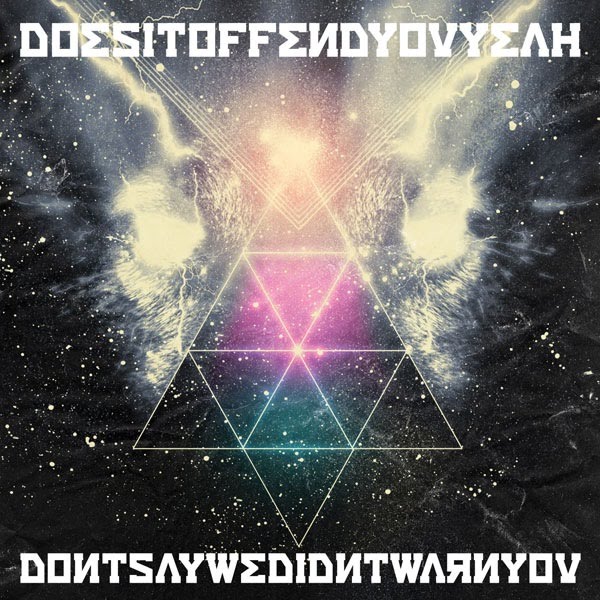
The Designer’s Drugs: Does It Offend You, Yeah? – Don’t Say We Didn’t Warn You

Medium: Album

Stimulus: Does It Offend You, Yeah? – Don’t Say We Didn’t Warn You

Anno: 2011


My initial response to Does It Offend You’s follow-up to its excellent debut, You Have No Idea What You’re Getting Yourself Into, is that the new album is The Empire Strikes Back to its predecessor’s A New Hope. Whereas the band’s first album was a swashbuckling adventure through synthy pop rock, Don’t Say We Didn’t Warn You is a much darker record.  On it, Does It Offend You trades in good cheer for violent outbursts and harsh beats that border on Hulk Smash industrial.

Lest this darkness be mistakenly interpreted as a bad thing, consider that the most arresting tracks on this work tend to be the most furious.  The album’s best track is its opener, the punishing “We Are the Dead.”  While it features a few ravey sound clips, the song owes as much to KMDFM as it does to the KLF.

The manic songs tend to be the pockets of the album which eschew the singing of James Rushent in favor of vocal samples, guest singers, or nearly no words at all.  “Yeah!” is the closest the disc comes to a true instrumental, a robotic rally march fueled by spastic drumbeats and a cheering mob.  The big brassy menace of “Wondering” is complimented by the deft rhymes of guest vocalist Trip, who goes on about Batman and Bill Hicks.  The vocals of the bouncy “Wrestler” come entirely from a speech by pro wrestling cult figure Paul Heyman, brilliantly complimenting the rush of the music.  The strangest track on the album, “The Monkeys Are Coming,” features a YouTube clip in which a clearly disturbed man rants about drugs, monkeys, crap eating, and fellatio (in that counterproductive order).  Despite all expectations, it’s a brilliantly aggressive tune.

None of this is to say that Does It Offend You broke the knob off at smashy and shouty.  Though nothing on Don’t Say We Didn’t Warn You is as bright as its predecessor, there are a few songs which turn down the violent gloom.  “Wrong Time Wrong Planet” is the zenith of the slow, a smooth electro-crooner where the constant basslines occasionally give way to fireworks.  The closing “Broken Arms” is practically a space ballad that, while it feels wholly out of place in the context of the album, is a great song in its own right.  The closest this album comes to the band’s former self is in “Pull out My Insides,” an upbeat, cheerful song which still manages to convey the band’s new wistfulness.

Ultimately, the important question here is not whether Does It Offend You’s new album is as good as its first.  They’re both excellent, though completely different, works.  Instead, its value depends on the listener’s mood.  If you’re up for a snarling bit of electronic dementia, Don’t Say We Didn’t Warn You will prove to be a very, very good choice.