The Designer’s Drugs: Monday Night Jihad

America!

Medium:  Literature

Jason Elam and Steve Yohn – Monday Night Jihad

Anno: 2008

I don’t remember ever finding a book with a title this absurd and this appropriate.  In case there was any confusion as to the plot, we’re dealing with a story that combines our country’s two national pastimes – football and counterterrorism – into one awesome package!  Yee-haw!  Does this book already sound like the kind of thing I would groin-punch myself with out of weirdness?  Of course!

A special ops guy turns football star in a fictitious pro league (because apparently the NFL found this idea too “fringe” to carry their prestigious banner).  Then things in America start blowing up.  Then guy goes back to special ops to shine the Lion-O beacon of Christ and kick terrorist butt.  Didn’t they do an episode of Walker, Texas Ranger about this?

By the way, our hero’s name is Riley Covington.  I’m not going to fault the authors for this; I suppose that all the good porno names like Tom Hung and Reid Liberty were taken.

Aside from the sheer ridiculousness of the concept itself, the book suffers from the comparatively smaller drawback of having a case-breaking plot twist that a Mack Truck could drive through.  Seriously, the book is 368 pages, and if the swerve hasn’t been figured out by page fifty, well, there’s a lobotomy joke in there somewhere.

Having vented all that incredulousness, I do want to be fair about the upside of this book.  Starting off at the ground level, I will say that the authors could have made this thing a whole lot worse.  With a title like Monday Night Jihad, it’s easy to envision this as a drooling G.I. Joe fantasy, full of “U.S.A!” pro wrestling chants and square-jaws playing Mushy Cookie on the Qur’an.  And it’s really not.  There’s a great deal of sympathy for just about every character in the book, even for a few of the terrorists involved.  The authors, despite having slanted American perspectives, tried to tell this story from all angles.  The high point of this comes in a face to face confrontation between hero and villain, where both realize that, while they want to understand each other, they simply cannot.  Furthermore, the authors show thoughtfulness in containing their condemnation to violence itself; Monday Night Jihad never becomes a close-eyed rant against Islam.  Ultimately, everyone is human, frightened, and unsure, and this awareness makes a ludicrous idea more sympathetic.  And the action is pretty well done, in a sweet-ass Con Air sort of way.

Still, it’s a book about football and counterterrorism.  Either it will be laughed into obscurity, or it will join the ranks of The Great American Novels.  Myself, I’m kind of hoping for the latter.  But then again, I’m pretty strange.

The Designer’s Drugs: Super Sad True Love Story

Super Sad True Love Story

Medium: Literature

Stimulus: Gary Shteyngart – Super Sad True Love Story

Anno: 2010

This title lies.  Though the desperate, clinging search for love is what drives this book’s protagonist, this isn’t much of a romance.  Romance isn’t even the point.  More important than the boy-meets-girl drama that keeps the characters in Super Sad True Love Story busy is the setting in which all of this happens – a self-obsessed, totalitarian America of the future that is about to die.  It’s a country and culture in all ways bankrupt: in which everybody wants to be a teenager, in which Facebooking permeates every aspect of real life, and in which the Chinese are the debtmasters of the United States.  In other words, it’s frighteningly plausible.

Anchoring this bleak vision is a pudgy old schmuck named Lenny, a spinster in his late 30s who is as pathetic a specimen as can be found in these slick ruins.  He spends his days selling the promise of immortality to “High Net Worth Individuals” while simpering toward his boss, an old man made young whom Lenny has elevated into a father figure.  He also reads, which has become a serious social taboo.  His ratings in Personality and Fuckability – both real and legitimate assessments in this world – are doomed to always be low.

Yet in the midst of an exile to Rome – a place which, he notes, has accepted its decay with dignity – his life changes.  While wading through all the resigned, mechanical hedonism of the place, he meets Eunice Park, a hot mess of baggage who nonetheless inspires Lenny to never die.  In a match of convenience, Eunice moves into Lenny’s New York pad, and they begin an awkward, bumbling relationship.

The purpose of their union is not to incite Lenny and Eunice to grow together, but rather to refine their senses of alienation while around one another.  Part of this separateness comes from the fact that almost everybody in this story is disgustingly loathsome, yet another key reinforcement is the fact that both are children of immigrants (Lenny is Russian Jewish; Eunice is Korean).  Their America has become increasingly unfriendly to new faces, and so their parents are breathing reminders that they do not belong.  It’s oddly appropriate that Eunice’s family causes more damage to her than Lenny’s does to him, yet she is the person who better fits in with the pricks and sleazes.  Nonetheless, both ultimately act on their estrangement, and while they come to different conclusions they both become better for the change.

Super Sad True Love Story certainly qualifies as a sharp satire of the current (and probable) state of American culture.  Yet there’s an urgency to its depiction of America’s last shuddering moments that gives it an unexpected weight and sympathy.  It’s this end which proves most fascinating.

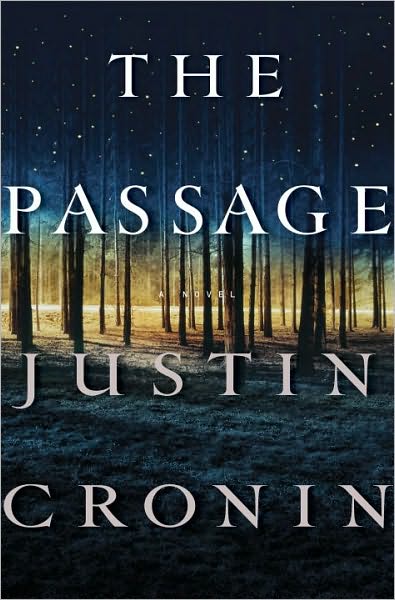
The Designer’s Drugs: Justin Cronin – The Passage

The Passage

Medium: Literature

Stimulus: Justin Cronin – The Passage

Anno: 2010

Like many masterpieces of horror, what makes The Passage one of the finest pieces of vampire literature to come along in a long, long time is that it’s not about the monsters.  So much time is invested into building the pre-bloodsucker world that when the creatures rise up, their presence is both fully formed and yet somewhat secondary.

Though entirely its own story, this first volume in Justin Cronin’s planned vampire trilogy is easily comparable to The Stand, both in plot and scope.  The first act of the tale is set in a United States a few years from now, in a world which has fallen further into the war on terror.  Further acts of mass destruction, committed both inside the country and beyond, have turned America into an ailing police state.  Such a declining state of affairs leads to drastic attempts to reassert American dominance, culminating with a plot to copyright immortality.  You can guess how well that turns out.  A hundred years later, mankind is in its death throes, when a girl from the old world reappears to lead a band of survivors to war.  Their present goal: to travel to ground zero and find the truth about the walking plague.

The main facet of Justin Cronin’s storytelling that sets him apart is his eagerness to infuse his story with consequence.  Too many characters come back when presumed lost, and this does pull the plot into an undue tidiness at times.  That some documents of the times have been preserved as exhibits in a society a thousand years in the future indicates that some form of civilization has survived, which takes away some of the danger.  Then again, Cronin is unafraid to wipe out anyone and everyone, and there’s a lot that could happen in the next millenium.  Despite the hazy future, the suspense in The Passage twists the reader’s expectations right to the very last sentence.

All of which wouldn’t mean a thing if the characters weren’t so well developed.  The people of the old world and the new – both the monsters and their prey – are examined without mercy.  Their flaws are brought into full view, yet at the same time no character, no matter how vile, is without humanity, and one can fully understand where each person is coming from.  The board is black and white, but the pieces are all shades of grey.

The sum total of The Passage is a story that may not reinvent the wheel, but is fully deserving of being called an epic.  If this first offering is any indication of how the rest of Cronin’s trilogy will unfold, this will be the vampire story by which all others will be judged.

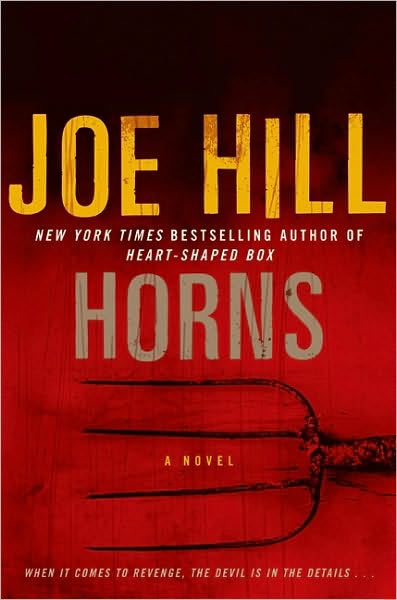
The Designer’s Drugs: Joe Hill – Horns

Medium: Literature

Stimulus: Joe Hill – Horns

Anno: 2010

This is a case of an author being held hostage by his own brilliance. Joe Hill’s debut novel, Heart Shaped Box, hit the book world like a ton of bricks, and his earlier collection of short stories, titled 20th Century Ghosts, showed a dazzling spectrum of nuance and terror. Expectations ran high for his follow-up novel, which tells the tale of a man turned devil out to avenge the death of his girlfriend. And while Horns begins and ends with a rather straightforward, if supernatural, premise of injustice and retribution, Hill’s talents give the story vitality far beyond the expected.

But first, the drawback. It’s clear that Hill fully intended this, but his usage of diabolical imagery and references often ranges from heavy-handed to outright corny. When devil-print underwear becomes a factor in a trailer brawl, it raised an eyebrow. When “Sympathy for the Devil” was mentioned, it rolled my eyes. But when Ignatius Perrish tracked down his girlfriend’s father wearing only an overcoat and a blue skirt and reintroduced himself as a “devil in a blue dress,” I groaned at the book.

Yet the plays on words do work both ways. The titular horns not only refer to the two pointy things growing from Ig’s head but also to the instruments his father and brother played to make their living. The recurring use of cherry also has multiple meanings, including virginity, explosives, and a possible fruit from Eden’s Tree of Knowledge. Ties are also important, both as articles of clothing and implements of bondage. While Hill must have been aware of his campy turns of devil phrase, his cleverness wasn’t limited to them alone.

In fact, much of what makes Horns so compelling is beyond the demonic. What this story is really about is the growing and fracturing relationships between three friends. Ig’s naïve outlook runs into direct contrast with that of his best friend Lee, who is guarded and worldly. Ig’s initial idolization of his new friend soon changes into genteel competition over the affections of Merrin, who develops a deep relationship with both. As much of the story is told in flashbacks, the point of Horns becomes not what happened between then and now, but how and why.

Despite a superficial adherence to theme, Joe Hill’s sophomore novel has firmly established him as a writer who can bury depth within the conventional. He seems primed to become the next big voice in horror, and there’s nothing in Horns to disprove that.

The Designer’s Drugs: Dustin Diamond – Behind the Bell

Dustin Diamond: Master Biographer

Medium: Literature

Stimulus: Dustin Diamond – Behind the Bell

Anno: 2009

Poor Dustin Diamond. He spent the late ‘80s and the entire ‘90s playing one of the greatest geeks of all time, Samuel “Screech” Powers from Saved by the Bell. Then he spent the past decade suffering for it. Wiped completely off the acting radar, Diamond became a stand-up comedian, dabbled in pro wrestling, appeared in a sex tape, played bass in a fairly wretched band, played a reality show jackass, and was transformed into a gay icon on the internet. Most of his misadventures reeked of desperation, forming another exhibit of a typecast child star clawing at any spotlight available.

News of Diamond’s latest lunge for attention, a tell-all book about life at Saved by the Bell, effectively burned his bridges with that past life. When his former Saved by the Bell castmates got together for People Magazine without him, they went so far as to have Screech Photoshopped out of the cast photos. The die was cast, and when the book arrived, it was every bit the inflammatory train wreck expected.

It’s safe to say that Behind the Bell won’t win Diamond many friends. Before even considering the book’s content, it’s telling that his autobiography is one of the worst edited pieces of junk to see major release. There are multiple instances of a sentence suddenly jumping to another line, of misused words (principle instead of principal), and, most baffling of all, the sudden repetition of paragraphs on the same page. All this gives one the impression that Behind the Bell was a hastily assembled scramble for cash, attention, and revenge.

What Diamond has to say doesn’t ease this cynicism. While there are rare moments where one can see the human being behind the bravado (Part II is a fairly objective look at the making of the show and the book’s best segment), the majority of this book is comprised of Diamond talking shit and bragging about his penis and where it’s been. It’s hard to sympathize with the outsider who fell into a world of trophy parents and their entitled brats when he relies so heavily upon the word “Douchenozzle.”

It’s believable that the show’s cast behaved badly, that drug-using Johnny Dakota was a good guy in real life while the Bayside gang was awash in the substances they shunned onscreen. Yet when Diamond goes on to accuse Mario Lopez of rape, insinuate that the show’s creator molested the cast, and suggest that the in-house magician turned young Neil Patrick Harris onto dudes, it comes off as scorned gossip. Most unbelievably, Diamond claims to have slept with 2,000 women, and categorically denies his gay icon status. Yeah, right!

Disaster memoir at its finest.